Fractions at the kitchen table: why the whole must stay the same size
A quarter is not automatically smaller than a half when the wholes differ. Use equal paper strips to separate the size of the whole from the number of equal parts.
An independent
parenting magazine.Baby days. School days. Everyday.
The complete collection
Communication, learning, growing independence and family life. Find a guide, a practical exercise or an attributed parent account.
16 articles
Clear filtersA quarter is not automatically smaller than a half when the wholes differ. Use equal paper strips to separate the size of the whole from the number of equal parts.
Fourteen minus six can be shown with counters or as two backward jumps. Keep track of what is removed so that reaching ten does not become the answer by mistake.
A child may know what a word means without recognising it in print, or read it aloud without understanding it. Those two difficulties call for different kinds of help.
Before correcting every spelling, help a child decide what a reader needs to know. One purposeful change can improve a sentence while leaving the writing in the child’s hands.
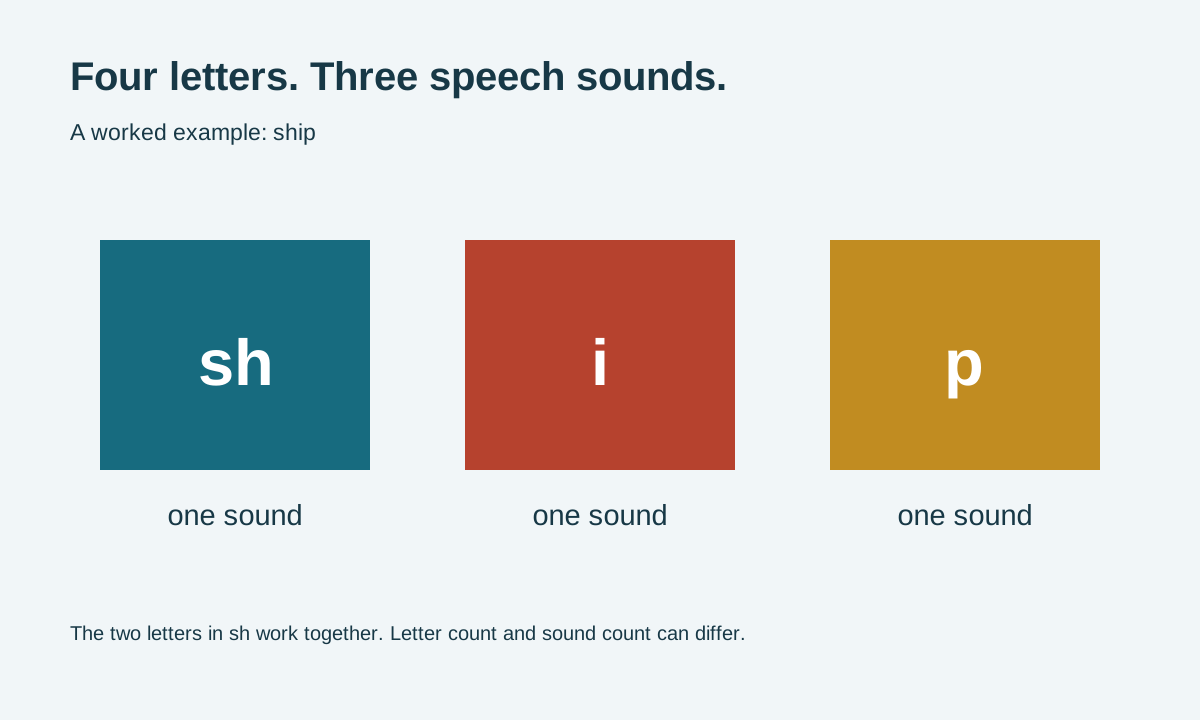
The printed word ship has four letters but three speech sounds: /sh/ /i/ /p/. The first two letters work together as one digraph, so sounding out the word means attending to three phonemes rather than saying four letter names.
Rereading a short, connected text can support attention to accurate reading, smoother phrasing, and meaning. Give each pass a different purpose, step in briefly when a word stalls, and end with an idea from the text.
Pictures can help a reader understand a story, but they do not identify the letters in a printed word. When a child guesses, direct attention back to the letter sequence, blend the sounds, and then use the picture to discuss meaning.
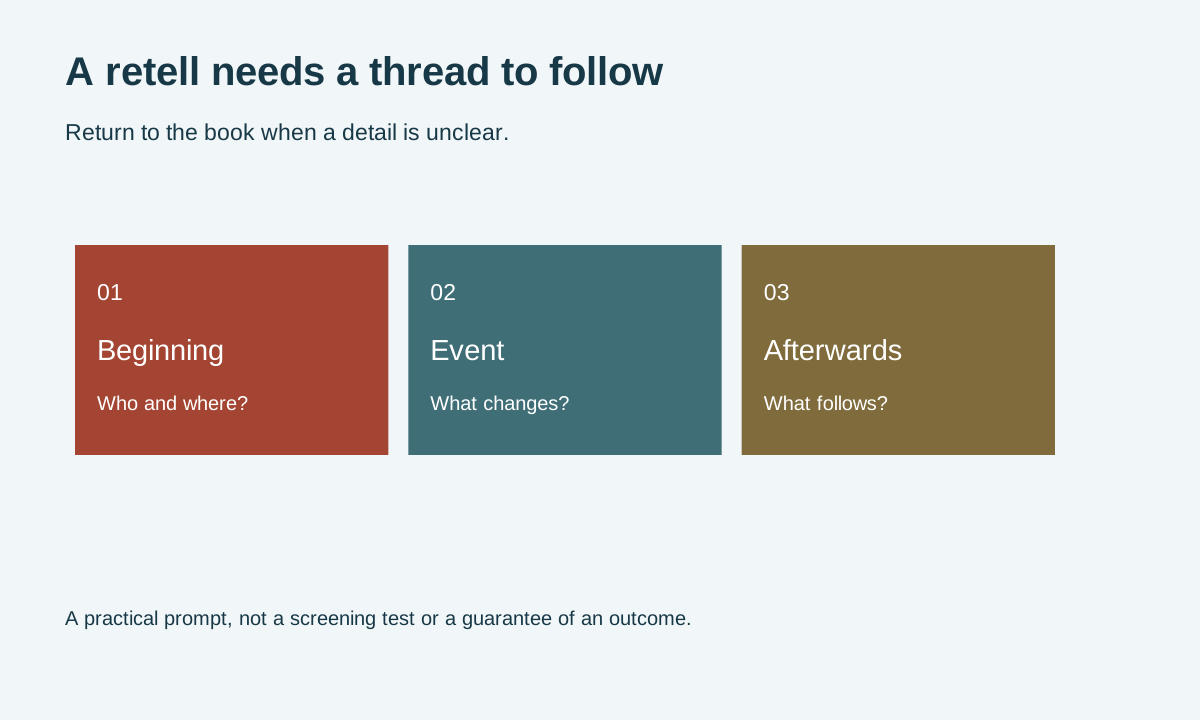
A brief retell can help a child organize what happened and put story ideas into words. Use an open invitation, listen for a beginning, an important event, and an ending, then return to the passage together when a detail needs support.
When spelling interrupts an idea, separate deciding what to say from writing every letter. Rehearse one short sentence aloud, make useful words available, and leave the child responsible for composing and recording the thought.
Handwriting practice is more useful when it is brief, purposeful, and connected to writing a child can use. A teacher can guide the target; adults can provide a comfortable setup, a clear task, and room to notice what becomes tiring.
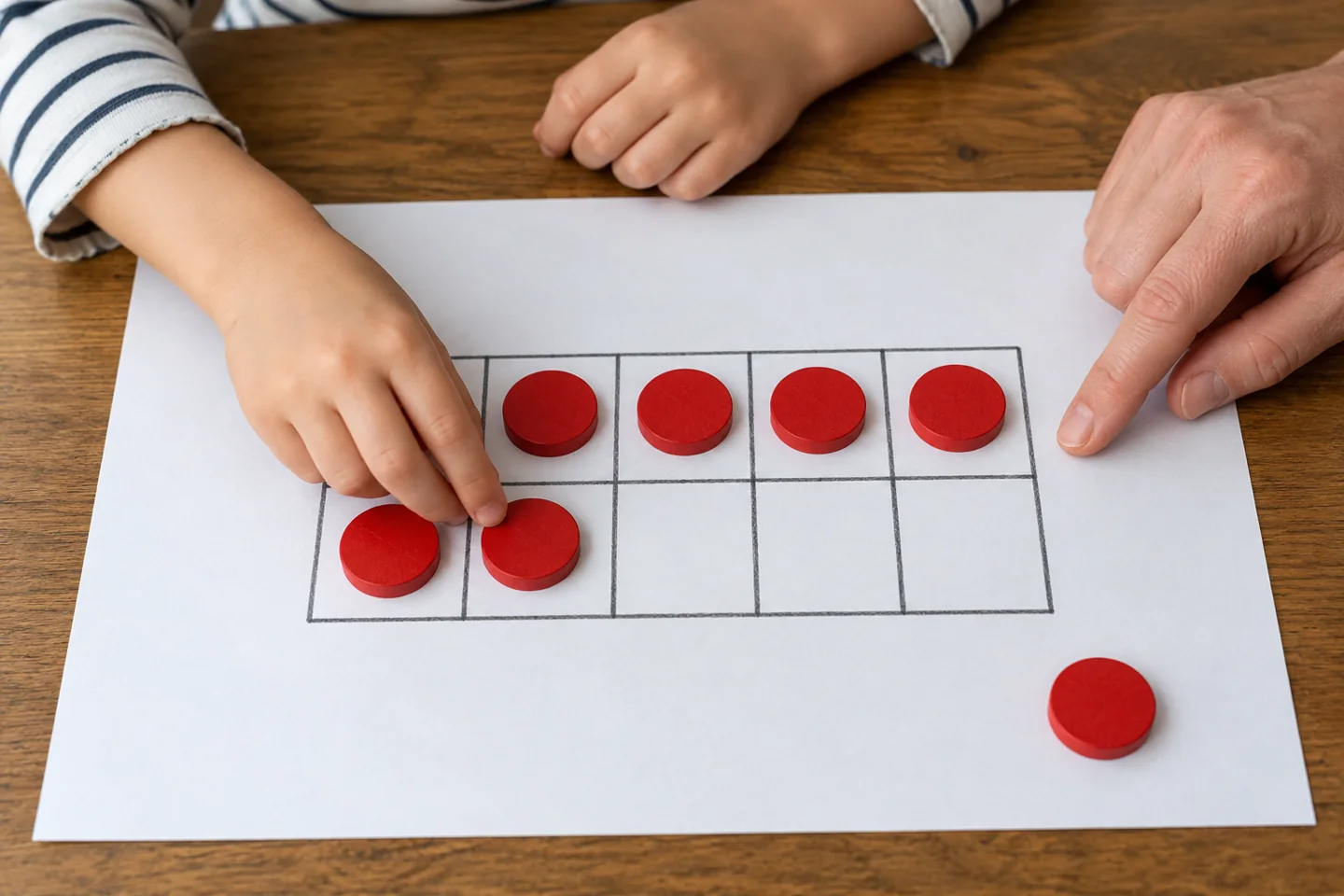
Use counters to show how 7 + 5 can be reorganized as ten and two more. The visible moves connect the objects, spoken explanation, and number sentence before learners rely on mental steps.
The same two quantities can invite a comparison or a combination. Matching sets and a shared bar model make the difference between “how many more?” and “how many altogether?” visible.
Bundles of ten make the structure of 23 visible: two tens and three ones. Exchanging one bundle for ten loose ones keeps the quantity unchanged while clarifying the value of each digit.
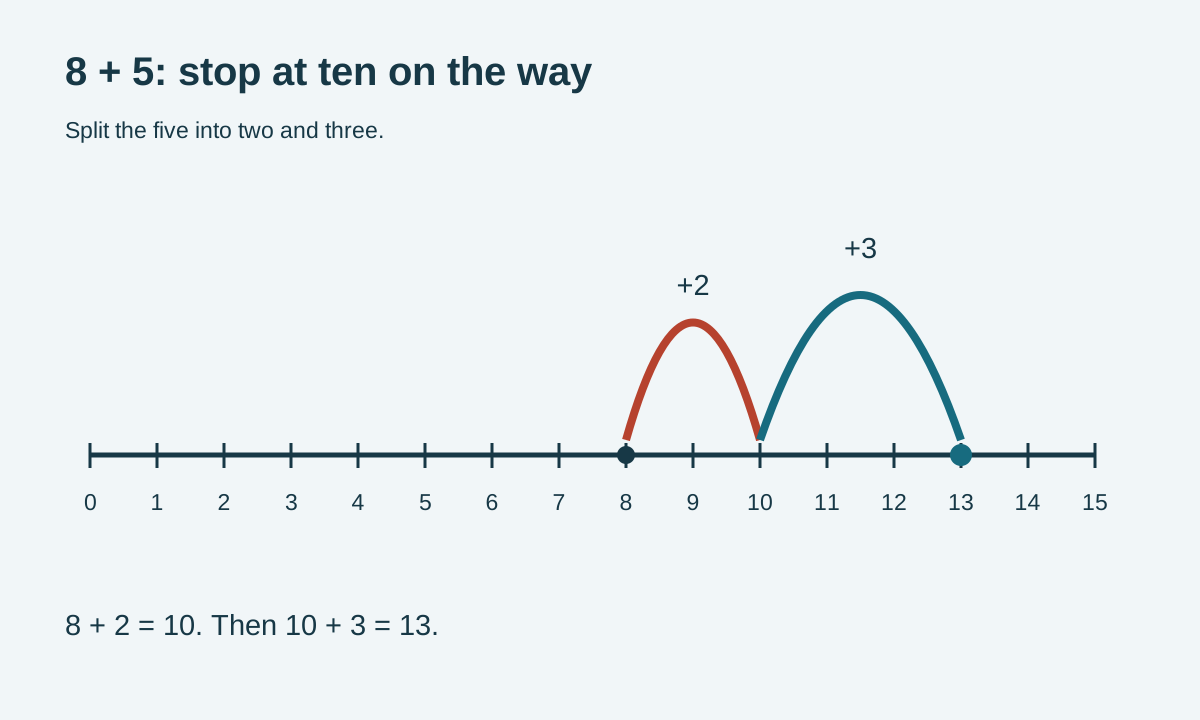
A number line shows addition as distance traveled. For 8 + 5, split the five into a jump of two to reach ten and a jump of three to reach thirteen.
Understand what each number counts and what the problem leaves unknown before selecting a calculation. A clear model for 24 children in 3 equal groups shows why the answer is 8 per group.
A small, well-described set of dated schoolwork can help a learning-support meeting focus on what the learner was asked to do, what happened, and which supports may help next.
The former Enmeshed Parenting identity has its own archive section.