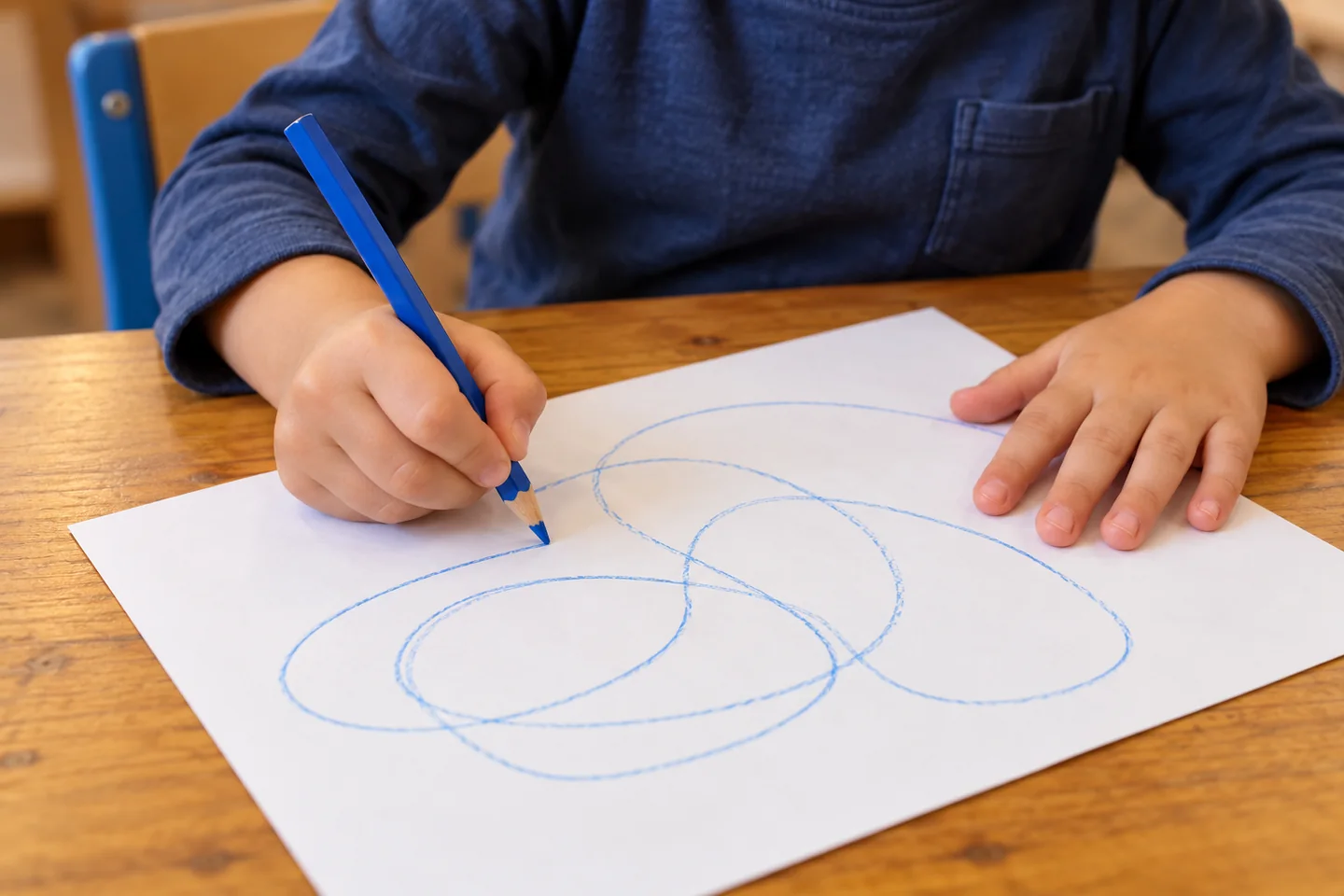
A full page of repeated letters can fill time without showing whether handwriting is becoming more useful. Short, purposeful practice gives the child a reason to write and makes it easier to adjust the task.
Let the writing goal guide the practice
Handwriting is one part of written work. A child may need to form particular letters, make writing easier to read, or write a short amount without losing the idea they want to express. Ask the teacher which skill is currently being taught before choosing what to practice at home.
The Institute of Education Sciences includes fluency with handwriting among the transcription skills elementary students need, alongside spelling, sentence construction, and typing or word processing. [1] This supports giving handwriting explicit attention. It does not mean that one fixed exercise or a prescribed grip fits every child.
Set up for comfort and visibility
Use a stable surface and a seat that lets the child work comfortably, with the page positioned so the words are easy to see. Make room for the writing hand and place the paper where the child can reach it without twisting awkwardly. A relaxed setup is a practical starting point; avoid forcing a particular hand position or grip.
Choose a pencil, marker, or other tool that the child can manage for the task. If the teacher has recommended a specific tool or format, use that. The goal is to reduce avoidable friction so attention can go to forming and using letters, not to enforce a single posture or equipment choice.
Use a short task with a real purpose
A brief session might begin with writing a few target letters, then using one of them in a word or a sentence. If the class is practicing a letter pattern, the child could write that pattern in a label or a sentence connected to current work. The teacher’s target should determine the letters and amount; there is no universal repetition count required here.
Meaningful writing provides a reason to make the letters legible. Copying one relevant word can be useful, but a long row of identical words may not show whether the child can use the skill while composing. Keep the practice short enough that the child can attend to how the letters are formed and what the writing says.
Adjust when effort rises
Notice when the child begins to rush, press hard, lose letter shapes, or become uncomfortable. Those observations can help the adult decide to pause, reduce the task, or ask the teacher what to change. Do not push through discomfort in the name of stamina. Stamina develops through appropriate practice and instruction, not by completing a page at any cost.
Separate the amount written from its readability. If the child writes fewer words but forms them clearly, that may be useful information. If writing is hard to read, focus on one teacher-selected feature, such as the shape or placement of a target letter, rather than correcting every mark at once.
Share observations, not diagnoses
A short note to the teacher can describe what happened: the task, how much the child wrote, what became less clear, and whether the child reported discomfort. Ask whether the practice matches the current classroom instruction and what a manageable home task would look like. The teacher can interpret those observations in light of the child’s work across settings.
Handwriting alone does not establish a diagnosis, and this routine is not a therapy protocol. The IES guide recommends fluency instruction within a broader writing program that also supports the writing process and an engaged community of writers. [1] Keep handwriting practice connected to communication: the child is writing so another person can read an idea.
References
Sources for the cited guidance and reported material. Worked examples and practical tools are original to Zolls.
- Institute of Education Sciences. Teaching Elementary School Students to Be Effective Writers.