A picture may make a word seem obvious before the reader has looked closely at the print. Treat the guess as a cue to return to the letters, not as a reason to argue about the picture.
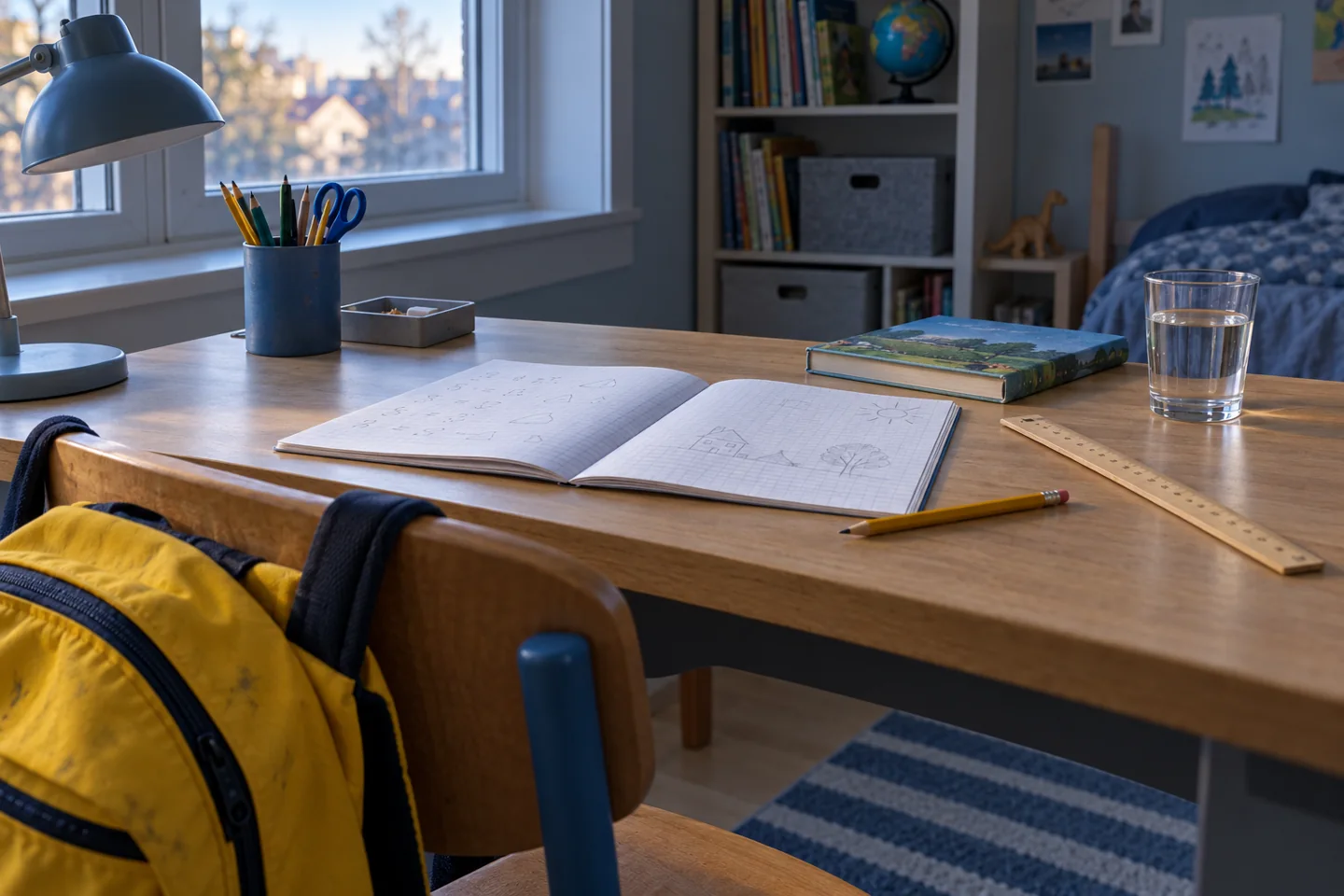
Separate what the picture tells from what the print says
An illustration can show a setting, an object, or an action. It can help a reader discuss what is happening in a story, but several words could fit the same image. The printed letters are what identify the word on the page.
The Institute of Education Sciences recommends teaching children how speech sounds link to letters and how to decode words, alongside reading connected text. [1] This makes the print a sensible place to return when a guess comes from the picture. The goal is to attend to the written word and preserve the sentence’s meaning, not to ban pictures from reading.
Bring attention back to the whole word
Point to the printed word and invite the child to look from the first letter through the rest of the sequence. Keep the request specific: “Let’s look at what these letters say.” If the child knows the relevant letter sounds, invite them to say each sound and blend them into a word. Avoid giving a string of vague clues that encourage another guess from context.
If the child is stuck, model the sound or word and let the child say it with you. Then return to the sentence and check that the word makes sense there. Help is part of the reading interaction; the child does not need to struggle indefinitely to prove independence.
A worked example: cat and cap
Suppose the printed word is “cat,” while the illustration shows a cap. A child points at the picture and says “cap.” Calmly return to the print. Draw attention to the final letter: the word ends with t, not p. If the child knows those sounds, say the sounds in order and blend them: /k/ /a/ /t/ becomes “cat.” This is an original teaching example, not a study result.
Now read the sentence with “cat” in it. The picture may still help the child talk about the scene, but it did not determine the printed word. If the difference between t and p is not yet secure, supply the sound or word and move on; a single moment is not a basis for judging the child’s reading ability.
Keep correction brief and matter-of-fact
A useful correction makes the next action clear: look at the letters, work through their sounds, blend, and reread the sentence. Avoid framing the error as carelessness or implying that looking at a picture is always wrong. Readers can use illustrations to understand the story while still using the print to identify words.
If the child repeatedly guesses, make a note of what happened rather than turning every page into a debate. Are the words unfamiliar? Does the child need help with particular letter sounds? Does the sentence stop making sense after a guess? A teacher can use examples like these to clarify what instruction and practice are appropriate.
Use the picture after reading the word
Once the printed word has been read, the image can support a conversation about how it fits the story. Ask what the picture adds, or whether it shows something that the sentence does not mention. This keeps print reading and story discussion connected without treating them as interchangeable.
The IES guide recommends both decoding and connected-text reading; this brief routine brings those purposes together. [1] A child can work through the letters, read the sentence, and then use the illustration to think about the scene. No single cue should carry the whole reading task.
References
Sources for the cited guidance and reported material. Worked examples and practical tools are original to Zolls.
- Institute of Education Sciences. Foundational Skills to Support Students in Kindergarten Through 3rd Grade.