A second read is most useful when the reader knows what to attend to. Keep the same short passage, but change the focus from working out the words to reading them in phrases and noticing what they mean.
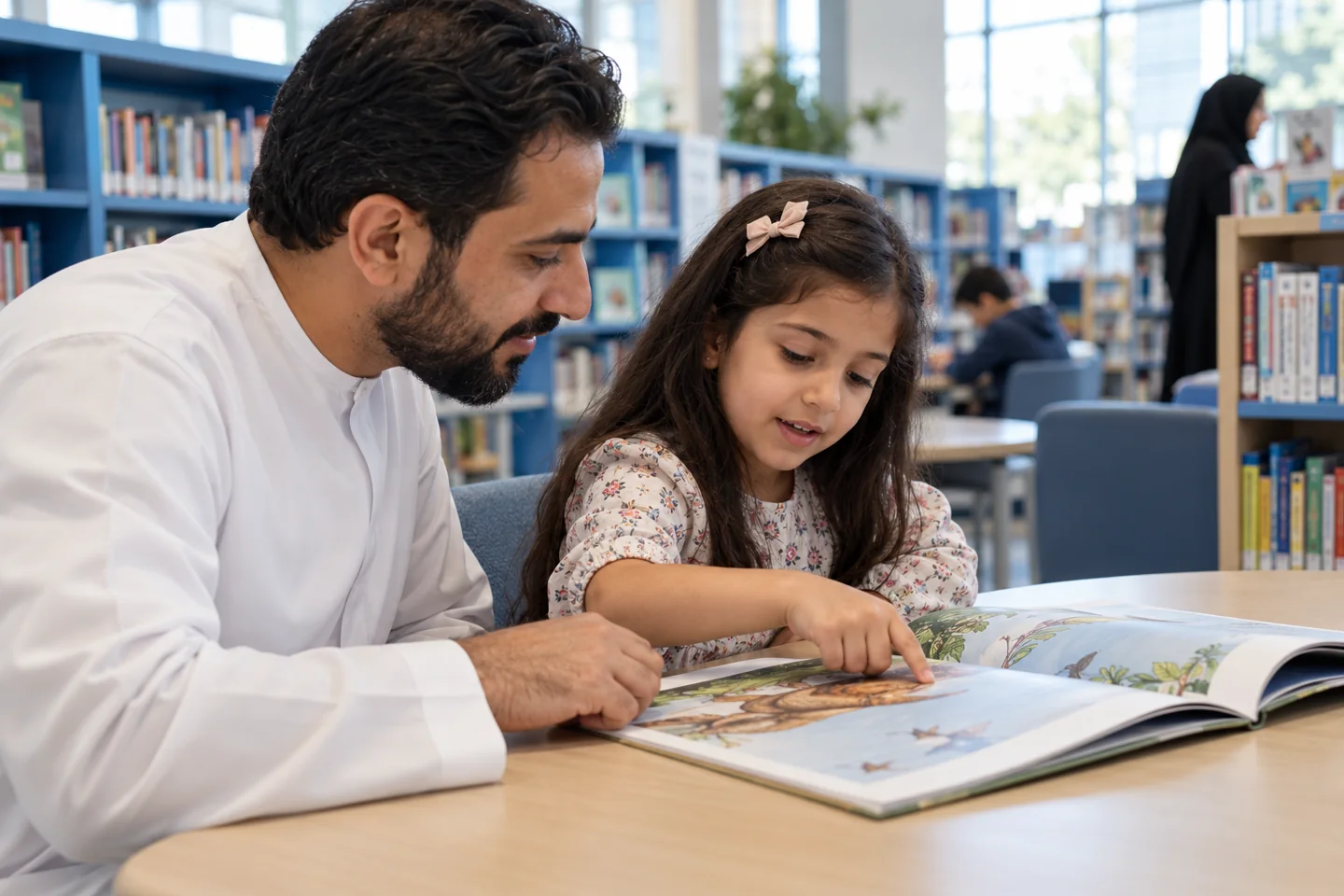
Choose a text that holds together
Use a short book or passage the child has already encountered, with a clear sequence of sentences and ideas. A connected text lets the reader use the words in context and follow meaning across sentences. The Institute of Education Sciences recommends regular reading of connected text to support accuracy, fluency, and comprehension. [1]
Keep the selection manageable enough to revisit without turning the session into a test. The point is not to choose the easiest possible page or to see how quickly it can be completed. A passage with a few challenging words is useful if an adult can offer timely help and the child can still follow the overall sense.
Give the first pass one job
Before reading, say what to focus on: “Let’s work out the words carefully.” Invite the child to read the passage aloud while you follow along. If a word causes a pause, allow a moment to look through its letters and try the sounds. If the child remains stuck, model the word clearly, then return to the sentence so its meaning is not lost.
Avoid turning every hesitation into a long conversation. Brief support keeps the reading connected. If a sentence no longer makes sense after an error, point back to it and reread that sentence together. Accuracy comes first in this pass; avoid timing, racing, or scoring the child against another reader.
Change the purpose on the next read
For the second pass, offer a meaning or phrasing focus: “Let’s read so the sentence sounds like someone telling us what happened.” You might model a sentence with a natural pause at a comma, or invite the child to notice which words belong together. The aim is an understandable reading, not a performance or a demand to sound expressive on every line.
If a word that was difficult becomes familiar, acknowledge the useful work without making speed the reward. If it is still difficult, help again. Rereading does not mean the child must solve every word independently; it provides another opportunity to attend to the text with support.
Keep a small amount of talk about meaning
After the passage, ask one open question tied to what is actually there: “What changed in this part?” or “Which sentence helped you understand that?” Give the child time to answer. If the response is uncertain, revisit the relevant sentence and think aloud about what it says. The IES guide includes narrative language and vocabulary alongside foundational reading skills, so talk about meaning can sit naturally beside reading practice. [1]
Stay within the passage. Do not ask a reader to explain details the text never gives, and do not treat a short answer as proof that the child did not understand. A retell, a question, or a simple connection to a word on the page can all close the activity.
End while the text still feels usable
Finish by naming one specific thing the reader did: returned to a sentence, noticed a useful pause, or worked through a printed word with help. Then put the book away or choose another activity. Several purposeful minutes are more useful than repeating the same page until attention and meaning drain away.
Rereading is one part of reading instruction. If reading remains persistently difficult, share concrete observations with the teacher and ask what skills the current classroom work is targeting. Repeating a passage at home should not be presented as a stand-alone answer to a reading difficulty or as a treatment for dyslexia.
References
Sources for the cited guidance and reported material. Worked examples and practical tools are original to Zolls.
- Institute of Education Sciences. Foundational Skills to Support Students in Kindergarten Through 3rd Grade.