Bring a few pieces that show the task and the process, not a pile of papers. The aim is to make the learner’s experience easier to discuss and plan for.
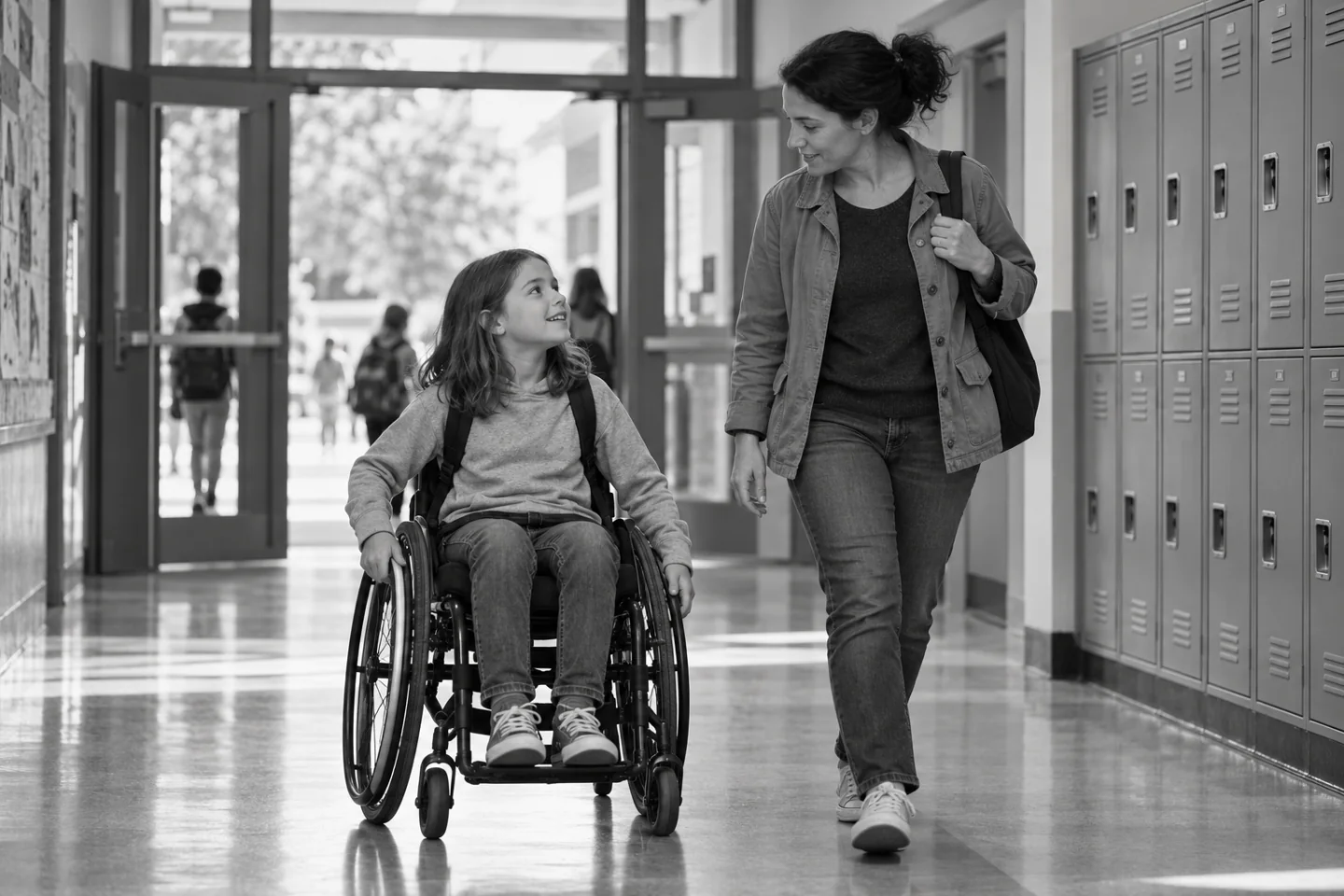
Choose samples that show a pattern
Select a few recent pieces from the subject or skill you want to discuss. Include work that felt manageable as well as work that was difficult; this helps the group compare conditions instead of treating one result as the whole picture.
Choose different kinds of tasks when they are relevant. For reading, that might include a short passage, a written response, or a spelling task. For mathematics, it could include computation and a word problem. The IES reading guide describes foundational skills such as sound awareness, decoding, and connected-text reading; the IES mathematics guide addresses areas including mathematical language, representations, and word problems. A sample can help identify what to discuss within these areas, but it cannot establish a diagnosis or guarantee a particular conclusion. [1] [2]
Make each page understandable
Write the date and subject on a copy or removable note. Add the exact instruction if it is not printed on the page. Record whether the task was completed in class, at home, independently, or with help; those conditions affect how another person can interpret the result.
Note what support was available: for example, a worked example, extra time, reading the directions aloud, manipulatives, or a reminder to check work. Distinguish support offered from support used. If the learner explained what felt easy, confusing, or tiring, record that in their own words as accurately as possible, without turning it into a label.
Keep the original private and bring copies when practical. Mark a specific place you want the teacher to look at, such as where the learner stopped or changed a strategy. Avoid writing conclusions such as “cannot do fractions” when the page only shows difficulty on one task.
Describe the concern in observable terms
Before the meeting, write one or two sentences about the task and the obstacle. “On two recent multi-step problems, the learner began accurately but left the final step blank” gives the group something to examine. “Not trying” assigns a motive that the page may not show.
Separate what you observed from what you wonder about. For instance: “The directions were read aloud; the learner completed the first three items and asked what ‘compare’ meant. I wonder whether the wording or the calculation was the main barrier.” This keeps possible explanations open and invites the teacher to add classroom context.
If the work varies, include that variation rather than selecting only the lowest result. Differences across task wording, time, examples, or format may help the team discuss what conditions support access.
Use the meeting to agree on a next step
Ask the teacher to explain what the task was intended to assess and how the sample compares with recent classroom work. Ask what instruction or support has already been tried, how it was provided, and what the learner did in response.
Choose a small next step that can be observed in ordinary schoolwork. Agree who will provide it, in which kind of task, and when the group will review what happened. The plan should specify what evidence would be useful, such as whether the learner starts independently, uses a representation, or completes a particular step with the support.
Write down the agreed action and follow-up date before leaving. A work sample can focus a conversation; it does not itself determine eligibility, rights, or diagnosis. If the group needs information beyond the samples, ask what other classroom observations or school processes are appropriate.
References
Sources for the cited guidance and reported material. Worked examples and practical tools are original to Zolls.
- Institute of Education Sciences. Foundational Skills to Support Students in Kindergarten Through 3rd Grade.
- Institute of Education Sciences. Assisting Students Struggling with Mathematics: Intervention in the Elementary Grades.