Hiding one toy: a simple search game without turning play into a test
A familiar toy and a small cloth can support a shared search game. Keep the hiding place obvious, help when needed and notice the interaction rather than scoring success.
An independent
parenting magazine.Baby days. School days. Everyday.
The complete collection
Communication, learning, growing independence and family life. Find a guide, a practical exercise or an attributed parent account.
204 articles
Clear filtersA familiar toy and a small cloth can support a shared search game. Keep the hiding place obvious, help when needed and notice the interaction rather than scoring success.
A pointing finger can ask for help or invite you to notice something interesting. Observe the surrounding exchange without demanding a spoken word before you respond.
Rapid changes between toys can make an adult worry about attention. Look at what the child is doing within the changes, and adjust one feature of the play space.
A quarter is not automatically smaller than a half when the wholes differ. Use equal paper strips to separate the size of the whole from the number of equal parts.
Fourteen minus six can be shown with counters or as two backward jumps. Keep track of what is removed so that reaching ten does not become the answer by mistake.
A child may know what a word means without recognising it in print, or read it aloud without understanding it. Those two difficulties call for different kinds of help.
Before correcting every spelling, help a child decide what a reader needs to know. One purposeful change can improve a sentence while leaving the writing in the child’s hands.
A pretend purchase can teach a child to distinguish the price, the amount paid and the change. Count upward with labelled paper money before trying the same task in a busy shop.
A remote reading call works better when everyone knows who is reading, which pages are shared and how to ask for help. Choose a small task and let the child help run it.
A child’s communication can draw on more than one language, and mixing languages can be part of learning. Notice real examples across settings, keep using comfortable home languages, and raise concerns across languages with a speech-language professional.
A board book can become shared language play when an adult notices what a baby or toddler looks at, names it, and pauses for a response. Follow the child’s interest; there is no need to finish the book.
Useful observations describe what a child did, where it happened, and what support was available. Comparing those details across home and nursery can clarify a concern without labeling the child or ranking them against peers.
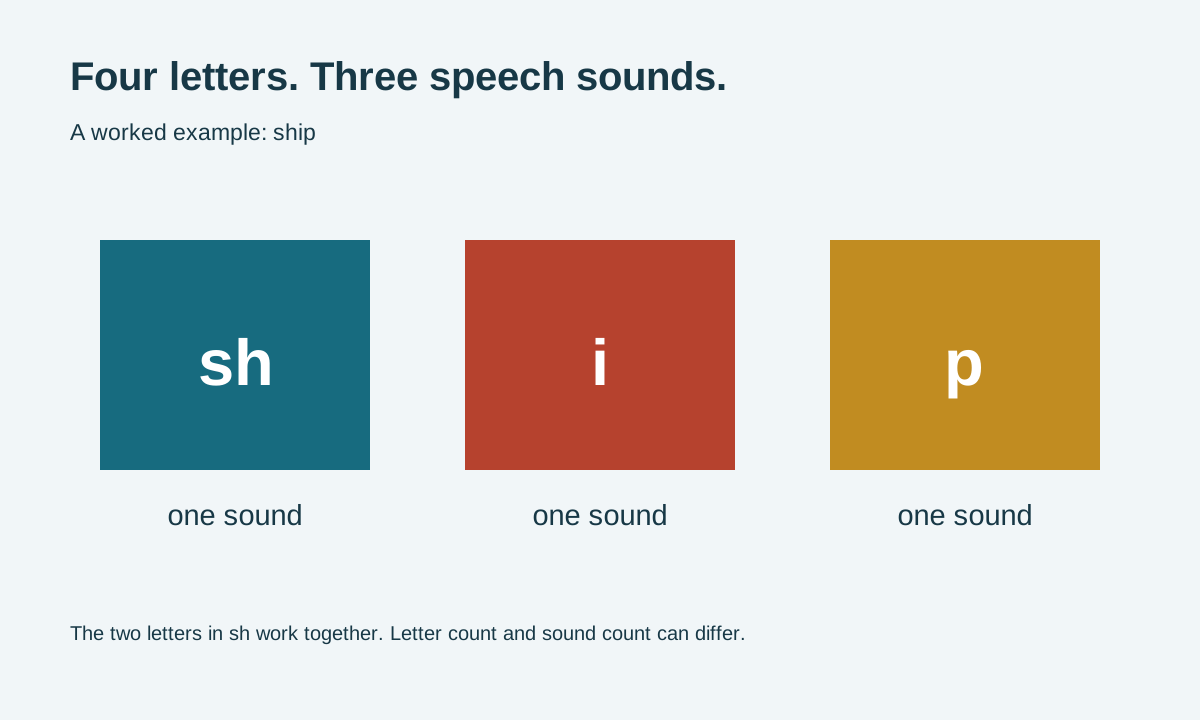
The printed word ship has four letters but three speech sounds: /sh/ /i/ /p/. The first two letters work together as one digraph, so sounding out the word means attending to three phonemes rather than saying four letter names.
Rereading a short, connected text can support attention to accurate reading, smoother phrasing, and meaning. Give each pass a different purpose, step in briefly when a word stalls, and end with an idea from the text.
Pictures can help a reader understand a story, but they do not identify the letters in a printed word. When a child guesses, direct attention back to the letter sequence, blend the sounds, and then use the picture to discuss meaning.
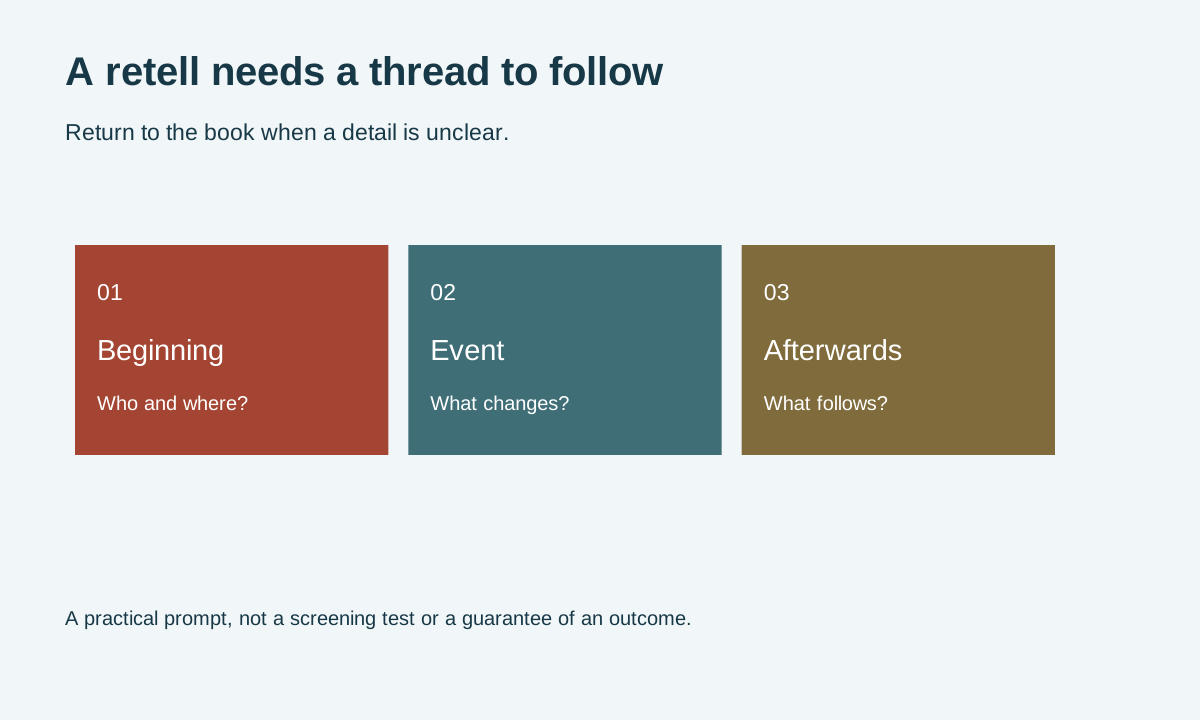
A brief retell can help a child organize what happened and put story ideas into words. Use an open invitation, listen for a beginning, an important event, and an ending, then return to the passage together when a detail needs support.
When spelling interrupts an idea, separate deciding what to say from writing every letter. Rehearse one short sentence aloud, make useful words available, and leave the child responsible for composing and recording the thought.
Handwriting practice is more useful when it is brief, purposeful, and connected to writing a child can use. A teacher can guide the target; adults can provide a comfortable setup, a clear task, and room to notice what becomes tiring.
The former Enmeshed Parenting identity has its own archive section.