A book session can be a few pages, one picture, or a single shared look. The child’s attention can set the pace.
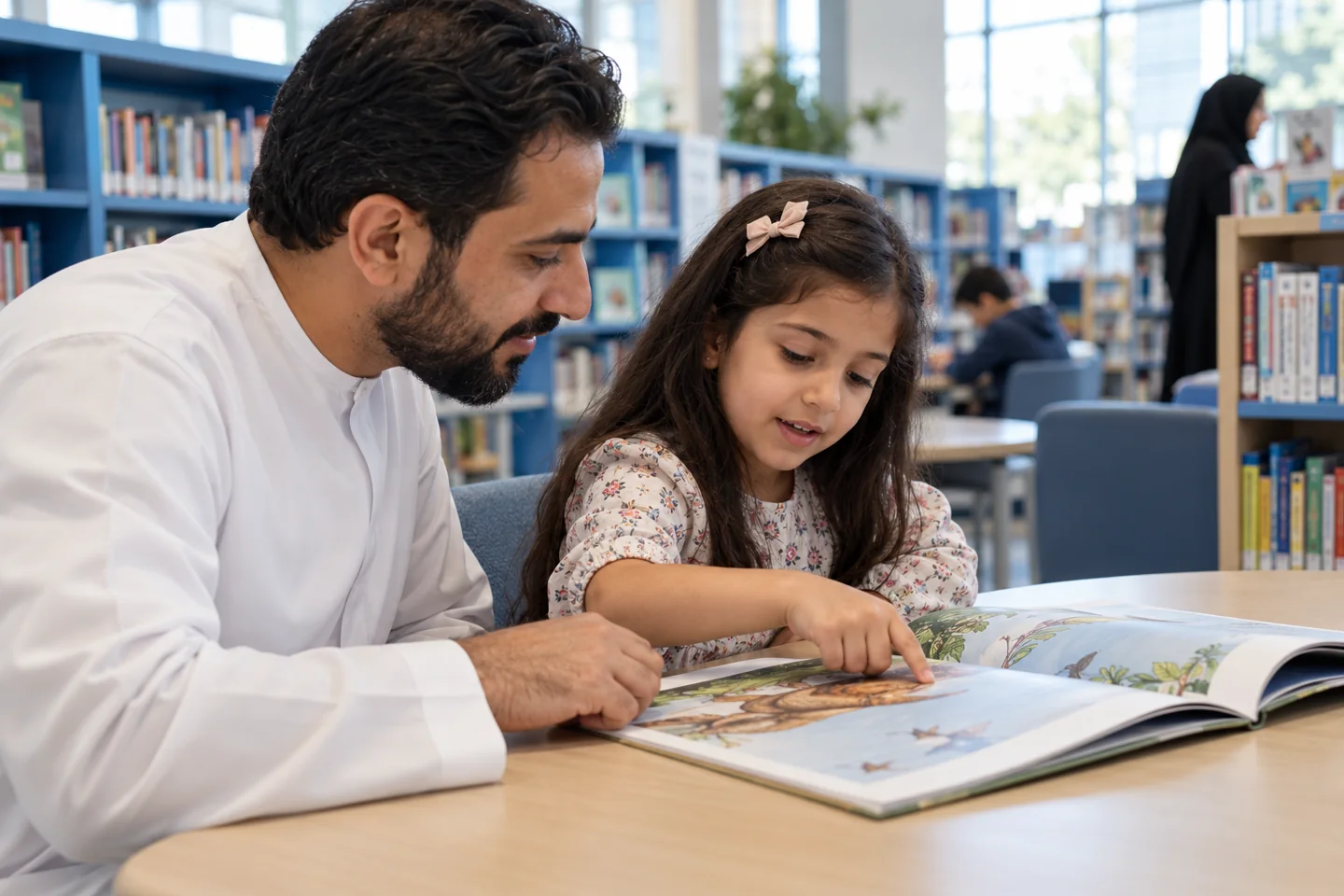
Settle in with the book within reach
Choose a sturdy board book with pictures the child can see clearly. Sit in a comfortable position that lets the child look at the pages and lets you follow their gaze. For a baby, you can hold the book where it is easy to see without moving it abruptly; for a toddler, place it where the child can reach or point if that is comfortable.
There is no required order or number of pages. UNICEF describes looking at baby books together and naming objects, animals, or plants in the pictures as a playful activity. The book offers shared attention and words; it does not need to be read word for word. [1]
Notice where the child looks
Pause on a page and watch for what catches the child’s attention: a bright shape, an animal, a face, or a familiar object. A baby may look quietly or turn toward a picture. A toddler may point, pat the page, name something, or turn to another page. These different responses can all guide what happens next.
You can follow the child’s gaze by looking at the same picture and naming it. If the child attends to a dog, say “dog” or describe what the dog is doing. If the child points to a cup, you might call it a cup and add a short detail. Harvard’s Center on the Developing Child describes responsive exchanges in which an adult notices a child’s cue, responds, and leaves room for another turn. [2]
Pause for a response of any kind
After naming the picture, wait quietly for a moment. The child might vocalize, look back, point again, touch the page, or shift attention elsewhere. Do not ask the same question repeatedly to get an answer. A pause lets the child participate at their own pace, and no visible response is required for you to continue calmly.
If the child makes a sound, you can answer it with a word connected to the picture. If the child points, name what is there. If the child turns away or closes the book, respect that cue and stop or take a break. Serve-and-return works through responsiveness, not by holding attention in place. [2]
Use the page as a shared conversation
The printed text is optional material. You can label a picture, describe an action, connect it to something familiar, or make a sound associated with the image. For example, on a page with a bus, an adult might say, “Bus. It has wheels,” then pause. That is an original illustration of language play, not a developmental test or a guaranteed learning outcome.
For a toddler, simple comments can invite a turn without demanding one: “The cat is hiding,” or “You found the moon.” If the child says a word, respond to its meaning and expand naturally with a few words. If the child is more interested in turning pages, follow along rather than repeatedly returning to the adult’s chosen picture.
Keep the exchange easy to leave. A child may engage with one page and then move on. You can close the book and return another time; finishing every page is not the goal.
Keep shared reading distinct from decoding lessons
For babies and toddlers, looking, listening, naming, and responding are shared language play. The purpose is enjoying a book together and exchanging attention. There is no need to ask the child to identify letters, sound out words, or demonstrate reading skills during this activity.
Formal instruction in print concepts or decoding is a different kind of learning task, suited to children receiving school-age literacy instruction. A baby pointing at a picture or a toddler naming an animal is communicating about the page; it should not be treated as proof of reading ability.
UNICEF presents book sharing alongside many forms of playful interaction and encourages adapting activities to a child’s needs. Keep the book accessible, use a language comfortable for the adult, and let the session end when interest does. [1]
References
Sources for the cited guidance and reported material. Worked examples and practical tools are original to Zolls.
- UNICEF. 21 learning activities for babies and toddlers.
- Harvard Center on the Developing Child. Serve and Return.