Making ten visible: counters before mental sums
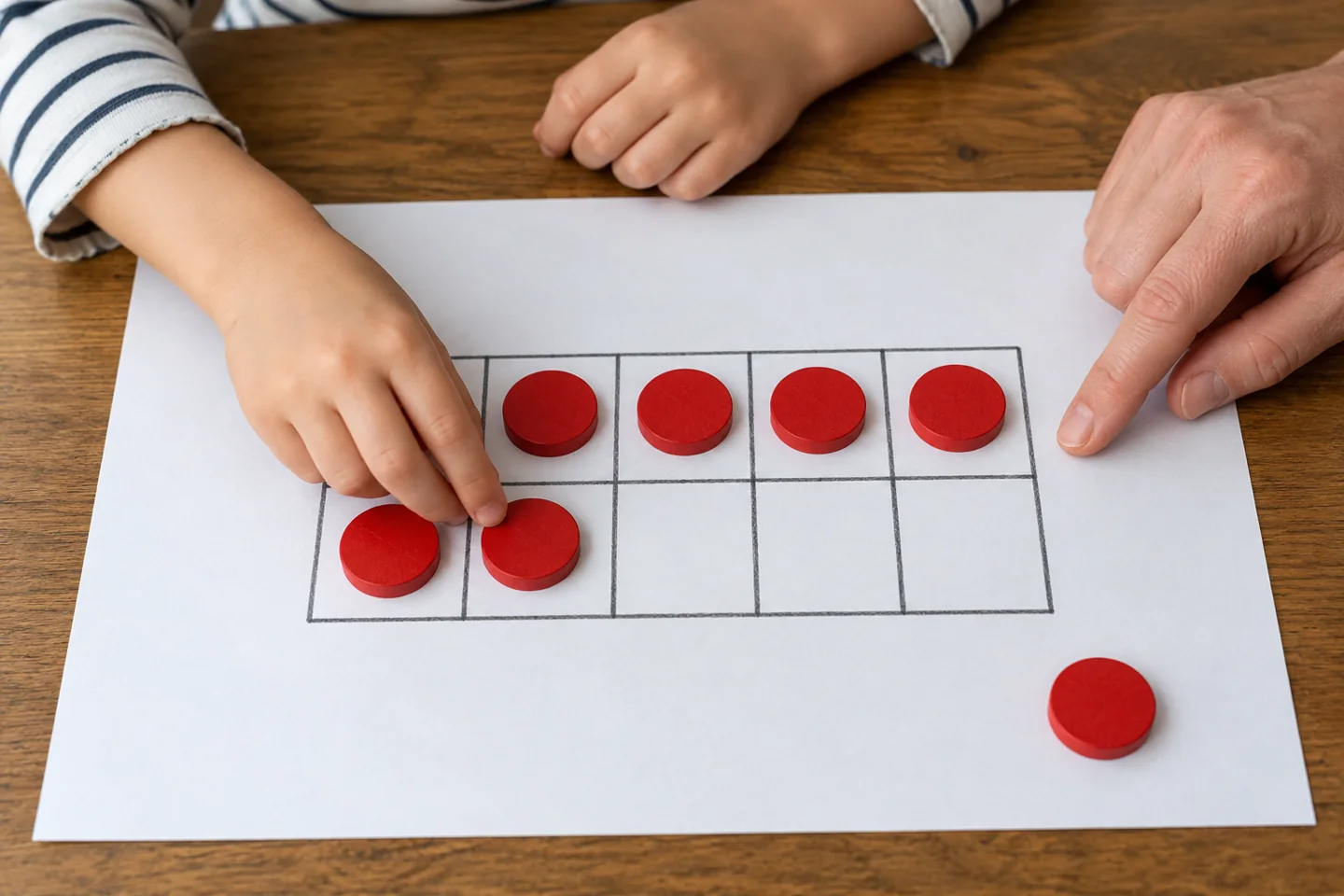
Use counters to show how 7 + 5 can be reorganized as ten and two more. The visible moves connect the objects, spoken explanation, and number sentence before learners rely on mental steps.
An independent
parenting magazine.Baby days. School days. Everyday.
The complete collection
Communication, learning, growing independence and family life. Find a guide, a practical exercise or an attributed parent account.
204 articles
Clear filtersUse counters to show how 7 + 5 can be reorganized as ten and two more. The visible moves connect the objects, spoken explanation, and number sentence before learners rely on mental steps.
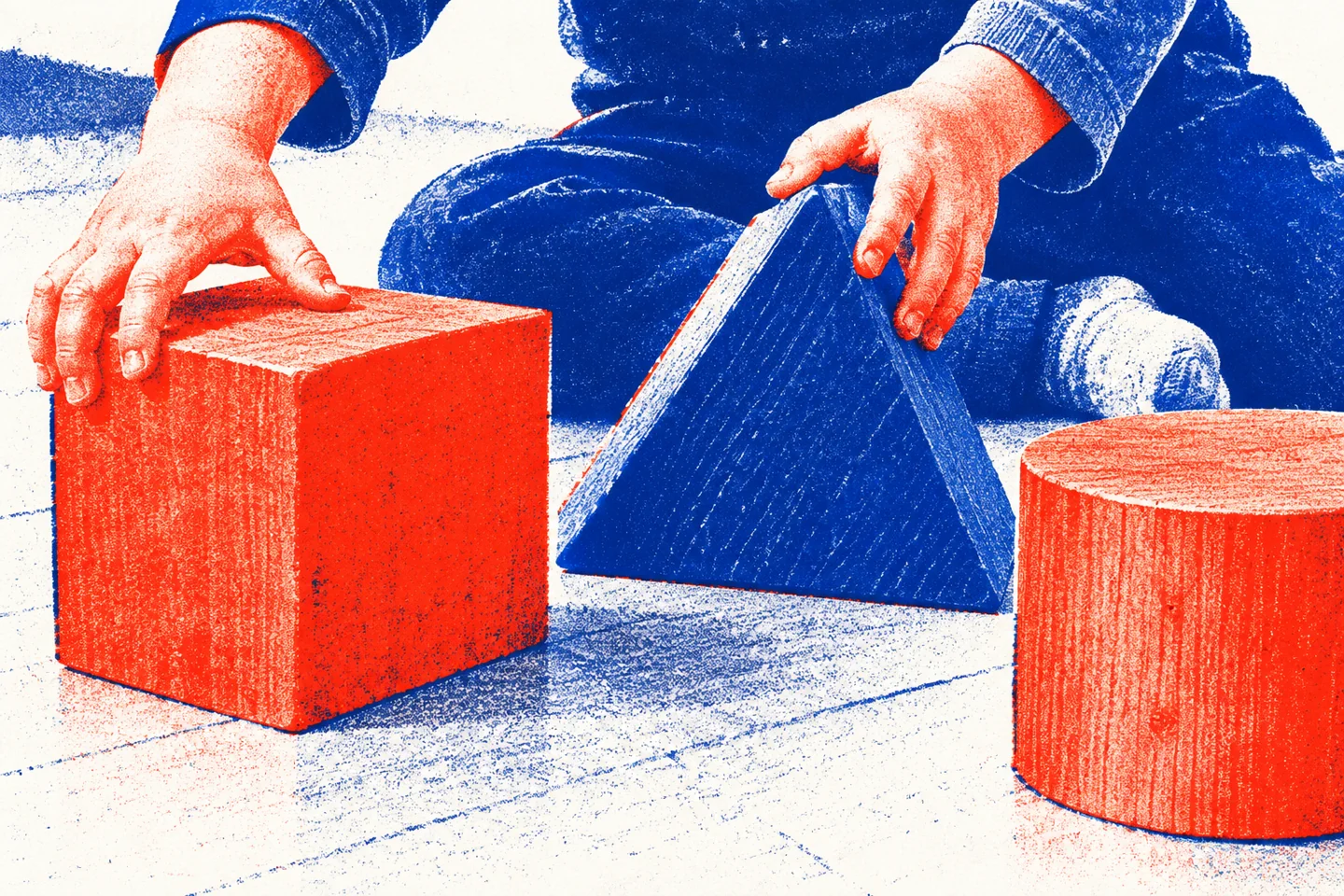
The same two quantities can invite a comparison or a combination. Matching sets and a shared bar model make the difference between “how many more?” and “how many altogether?” visible.
Bundles of ten make the structure of 23 visible: two tens and three ones. Exchanging one bundle for ten loose ones keeps the quantity unchanged while clarifying the value of each digit.
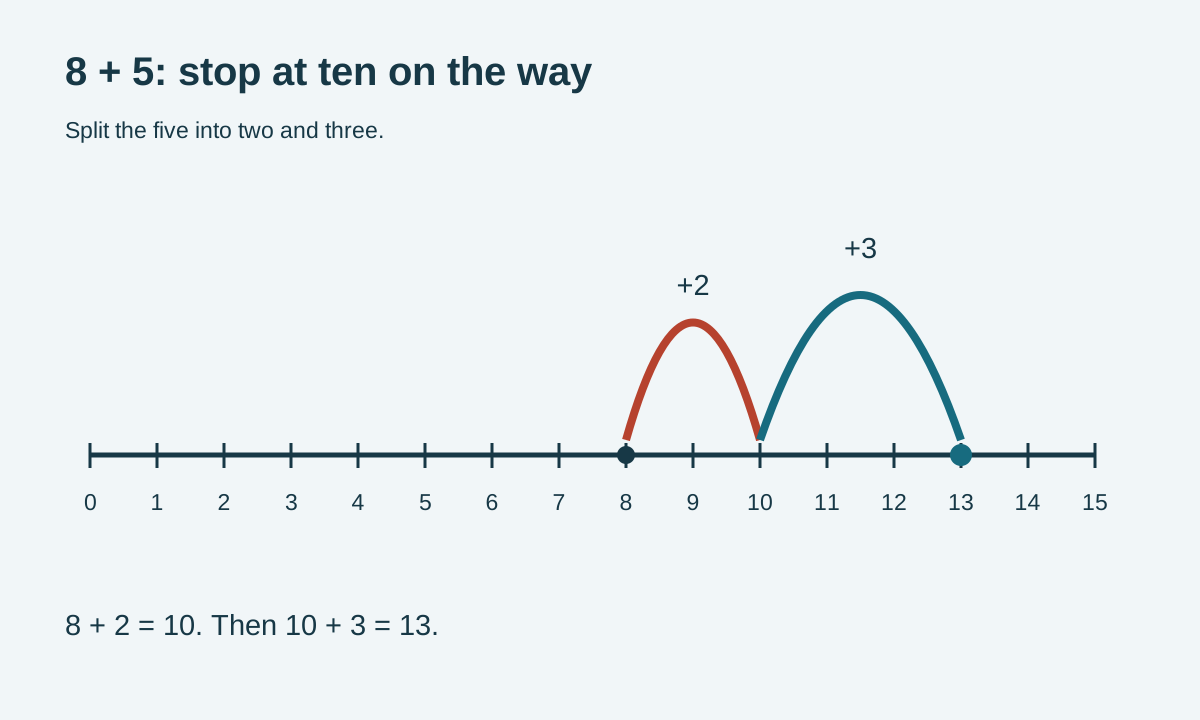
A number line shows addition as distance traveled. For 8 + 5, split the five into a jump of two to reach ten and a jump of three to reach thirteen.
Understand what each number counts and what the problem leaves unknown before selecting a calculation. A clear model for 24 children in 3 equal groups shows why the answer is 8 per group.
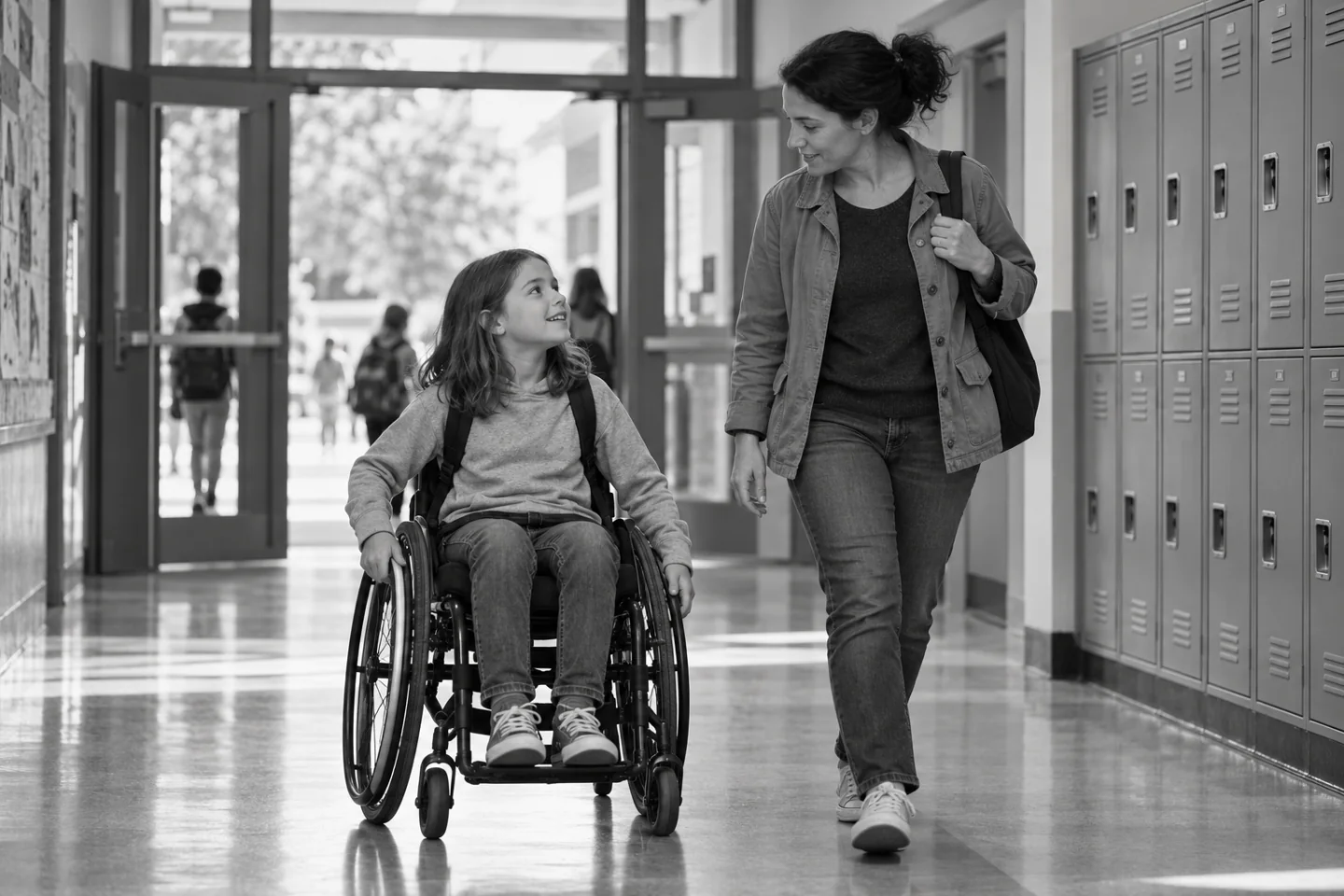
A small, well-described set of dated schoolwork can help a learning-support meeting focus on what the learner was asked to do, what happened, and which supports may help next.
When shoes vanish just before school, a short search can protect the morning without turning it into a blame session. Decide where to look, when to stop, and what the backup plan is.
A zipper can be a tiny task with a large deadline attached. Keep the child’s chance to try, make the stuck part visible, and decide ahead of time how you’ll help if time runs short.
Leaving the playground can bring a child’s disappointment into the open, right when an adult is watching the time. A clear warning, a limited choice, and a nearby safety boundary can help you leave without making carrying the default.
A hungry child arriving home can eat through the meal you had planned before you’ve finished setting it out. A filling, bounded snack and a realistic dinner adjustment can make the gap easier to manage.
Children can handle two bedtime styles more easily when the essential boundaries stay clear. Agree on the few points that matter, then let each parent keep their own reasonable way of getting there.
A repeated water request can leave a tired parent unsure whether to set a limit or keep returning. Make water available before settling, respond once without a long exchange, and adapt the plan if thirst or discomfort continues.
A night-shift schedule can put a parent’s waking hours out of step with school, meals, and bedtime. Choose a small dependable point of connection, protect the worker’s sleep, and explain changes in terms a child can follow.
Getting dressed can become a tug-of-war when a child accepts help from only one caregiver. Keep the morning moving while making room for preference, practice, and a calm handoff.
When siblings share a small room, bedtime tasks can interrupt one another. Build an evening sequence around the space you have, with quiet choices and a clear plan for staggered settling.
A schedule that once helped can fade into the background as it becomes familiar or stops matching the day. Make one small part useful again by checking its timing, visibility, and fit.
Stopping play is harder when a Lego creation feels unfinished and fragile. Protect the project, set a real departure boundary, and agree on a simple way to resume later.
Different pickup days can leave a child unsure who will be waiting and what happens next. Make the handoff visible and predictable while giving grandparents room for their own relationship with the child.
The former Enmeshed Parenting identity has its own archive section.