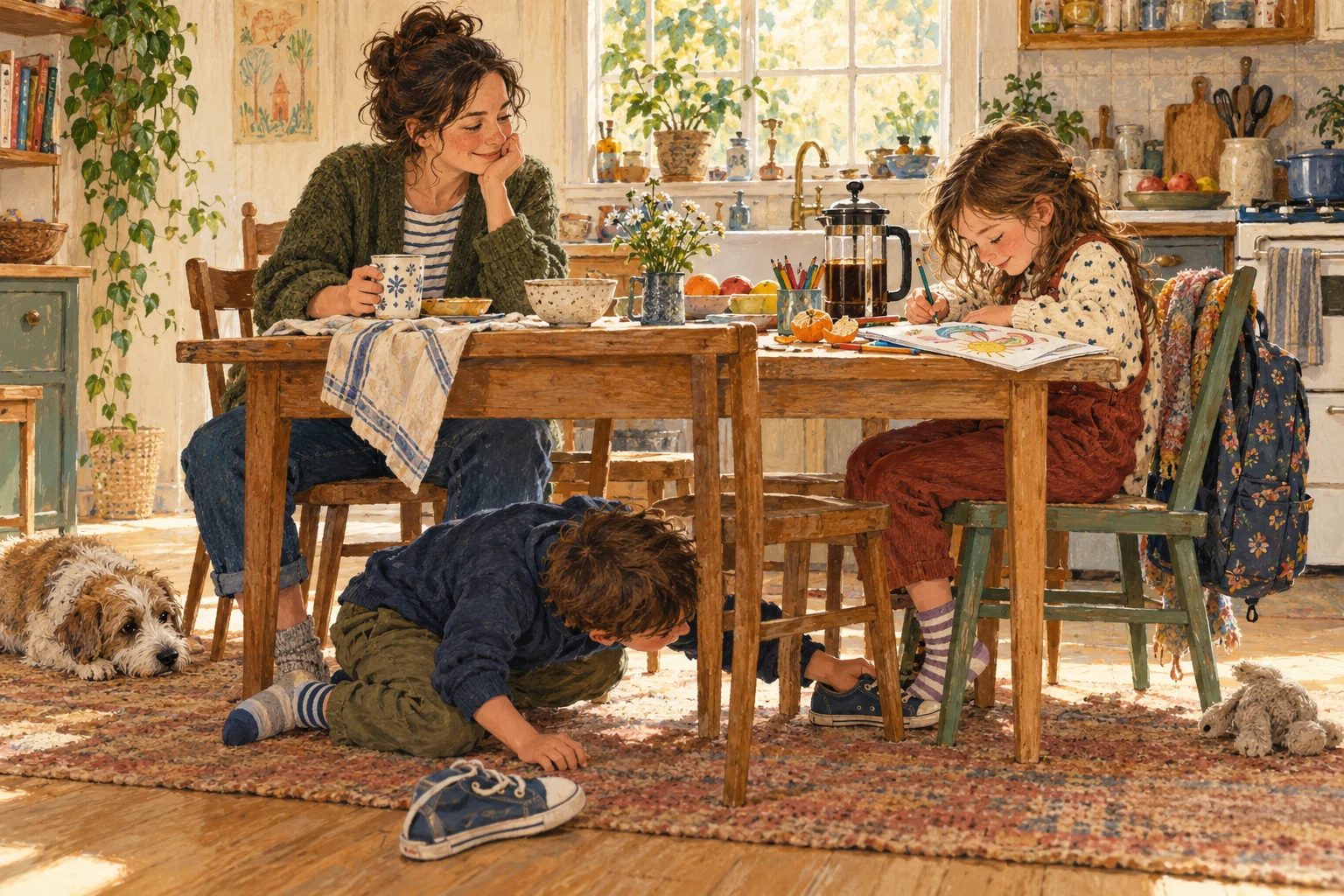
The clock says twenty minutes, one shoe is by the door, and the other seems to have disappeared since yesterday. A child may be searching too, or may be frozen by the rush. The useful question is not who should have remembered; it’s what gets everyone out the door safely now.
Set a search boundary
Pick two likely places and give the search a limit. Check the usual basket, the bedroom floor, or wherever shoes came off last. A toddler may need you beside them; an older child might be able to check one place while you check another. Keep the task within what the child can manage, and explain the next step calmly. Predictable routines can help, while still allowing for a changed plan when the morning goes sideways. [1]
You might say, “We have five minutes to look in the shoe basket and by the couch. I’ll check here; you can check your room, or come with me.” That gives a choice about participation without making the child responsible for the whole household schedule.
Choose the backup before tempers rise
Decide what counts as a workable substitute: another pair that fits and suits the weather, or a call to school if there is no safe option. Don’t send a child in footwear that makes walking unsafe just to preserve the arrival time. If the backup is a different pair, let the child know it’s for today; you can look for the missing shoe later.
You might say, “If it isn’t here when the timer ends, we’ll wear the blue pair today and search after school.” Keep the voice plain. A lecture about responsibility won’t make the shoe appear, and a child who is already distressed may hear it as blame.
If the first search doesn’t work
When the timer ends, follow through on the backup. If the child refuses it, name the limit and offer a small choice within it: “We need shoes for the walk. You can put on the blue pair, or I can help hold them while you start.” Avoid forcing eye contact or turning the moment into a contest. If the child needs a little space, stay nearby and keep the departure plan clear.
If no alternative fits, contact the school and explain that you’re delayed while you sort out safe footwear. That may be inconvenient, but it’s a more workable trade-off than rushing in shoes that don’t fit.
Make tonight’s handoff easier
After school, look for the missing shoe together only if there’s time and energy. Then choose one landing place for both shoes, such as a basket by the door. Try the routine for a few mornings and adjust the spot if shoes keep landing elsewhere. The arrangement should fit the family’s home and the child’s ability, rather than become another rule to enforce when everyone is tired. You might say, “When we come in, shoes go in this basket. Tomorrow we’ll know where to start.”
For today, the next choice is simple: finish the brief search, then use the safe backup or call ahead.
References
Sources for the cited guidance and reported material. Worked examples and practical tools are original to Zolls.