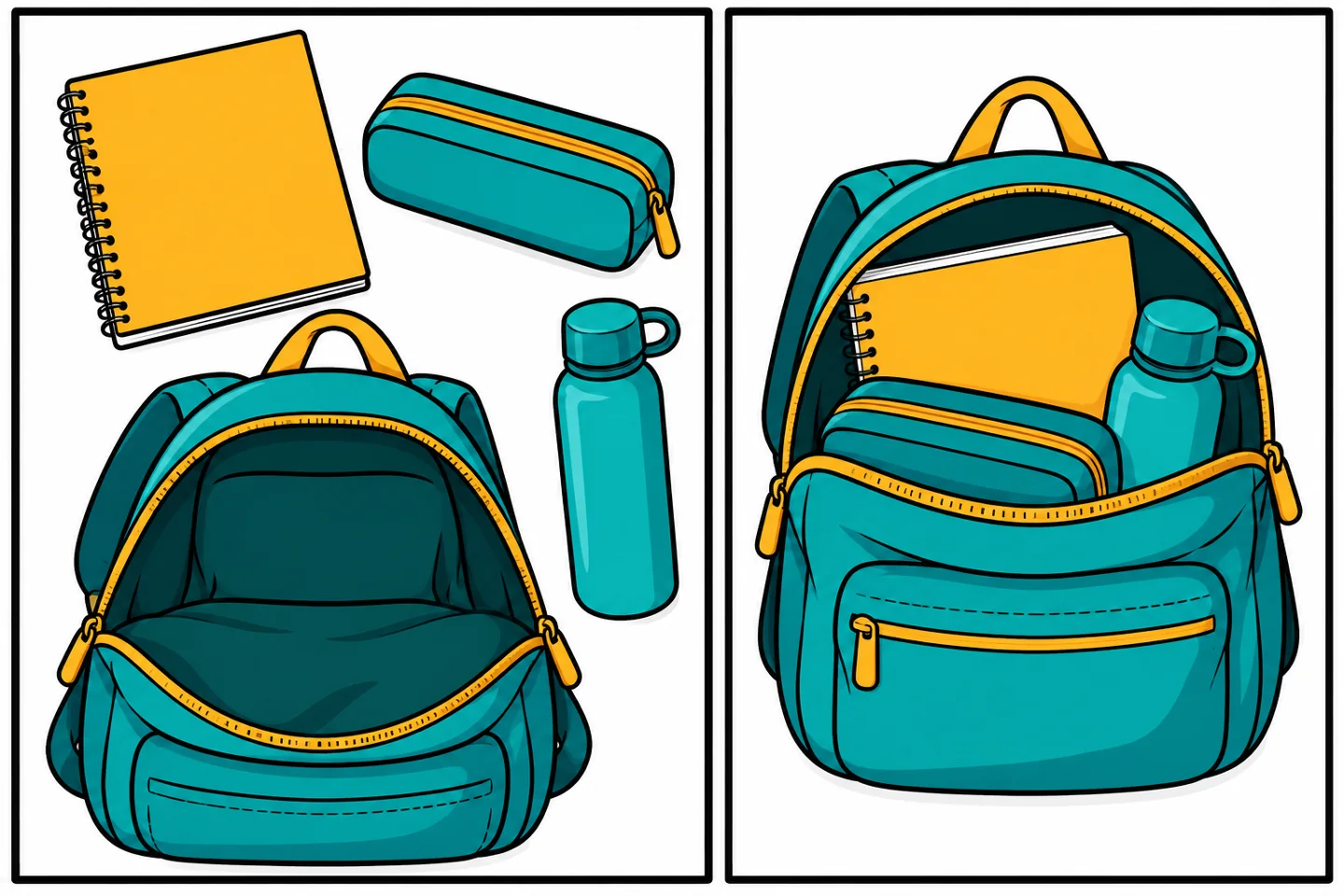
The school bag is open on the rug, but the child is also asking whether a library book belongs in it and where the lunch container went. A seven-year-old can take charge of parts of a weekly check when the task is visible and specific. The adult still carries responsibility for requirements the child can’t know or manage.
In this illustrative scenario, keep the list visible
On Sunday afternoon, Sam, 7, checks a short picture list with his parent, Lena. It shows a folder, library book, pencil case, and water bottle. The list is taped inside the bag so Sam doesn’t have to remember the whole sequence. Lena lays out the school’s weekly note and says, “You can check the pictures and put those things in. I’ll read the note and tell you if there’s anything extra this week.”
That division matters. Sam can identify his pencil case and put the folder in the bag, but he may not know that the class needs a permission slip on Tuesday. The adult checks school messages, weather-dependent clothing, and anything that requires adult judgment. The child’s role is meaningful without transferring the whole burden.
Let the child do the checking
Lena resists the urge to repack the bag while Sam is working. She sits nearby and asks him to point to each picture after he finds the item. If he asks whether something belongs, she can answer with a question that supports the task: “What does the list show?” or simply clarify when the item isn’t on the list. A seven-year-old may benefit from reading words alongside pictures, or from having the list reduced to fewer items.
The check stays short. Sam puts in the folder, book, and pencil case, then discovers the water bottle is still in the dishwasher. Lena tells him, “That one isn’t ready yet. I’ll put it by the sink, and you can add it after it’s dry.” The adult owns the part that depends on a household task.
A forgotten item is useful information
On Monday, Sam arrives without the library book. Lena doesn’t call the Sunday check a failure or make him responsible for a consequence he couldn’t control. They find the book under a cushion and leave it by the bag for the next day. Later, Lena changes the list: the library book gets a little book symbol and a place beside the bag, rather than relying on Sam to remember where it went.
If the first version still misses things, check whether the list is too long, the items don’t have consistent homes, or Sunday is too early for something used during the weekend. Keep the child’s portion small and move the adult check to a point when school notices are available. Don’t add a lecture or extra chores as a penalty for an incomplete list.
Hand over one job at a time
After a few weeks, Sam may be ready to check the list without Lena sitting beside him. They can try one step at a time: he packs the listed items; Lena checks the school note; both look at the bag once before it goes by the door. If that increases conflict or confusion, return to the simpler version and change the visual cues. The aim is a Sunday task a child can actually run with support, not a test of independence.
This Sunday, tape a four-item picture list inside the bag and let your child pack the items while you check the school note.