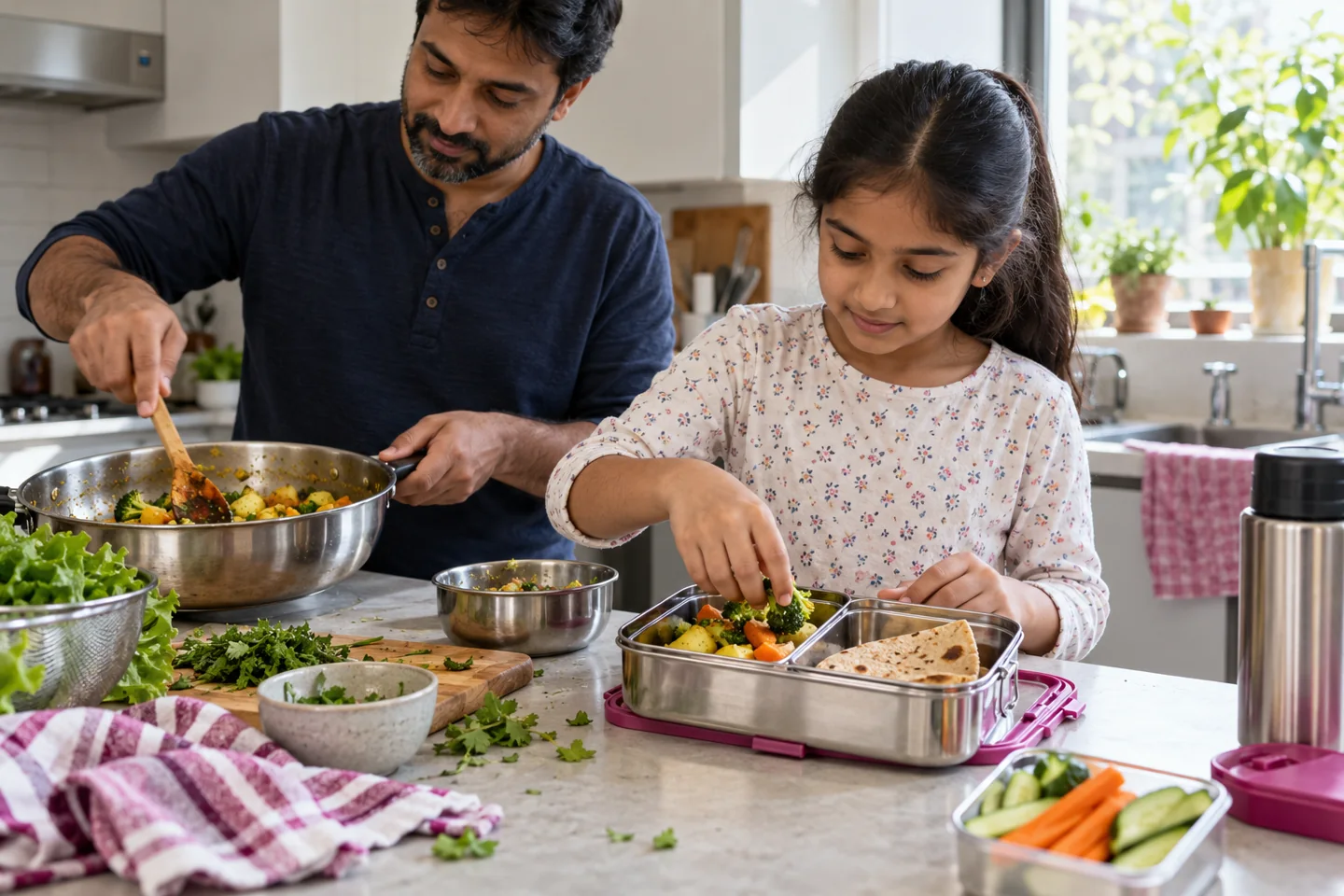
You find the lunch bag on the kitchen counter after the school doors have closed. Again. The first impulse may be to say, “How could you forget?” but that question won’t put food in the bag or make tomorrow morning simpler. For Maya, 8, and her dad, the third discovery of the week became a reason to change one part of the routine—not a verdict on who was responsible.
Separate lunch from the argument
Maya’s dad was frustrated. He had packed the lunch before work and now had to decide whether he could leave the house to deliver it. He checked the school’s usual arrangements and found that Maya could use the school meal that day. The family’s choices might be different: a caregiver may be able to bring the bag, the school may have a meal option, or a trusted adult may be available to help. Make the decision based on the child’s access to food and what is practical, not on a desire to teach a lesson through hunger.
Possible wording for the immediate moment is: “I see the lunch is here. Let’s make sure you have something to eat today. We can work out tomorrow’s plan after school.” This keeps the urgent need first and sets aside the bigger conversation until neither of you is rushing. It also avoids deciding in the doorway that the child deliberately caused the problem. You may be annoyed and still handle the lunch calmly.
Look at the handoff, not just the memory
That afternoon, Maya said she remembered the lunch while putting on her shoes, then got caught up looking for a library book. Her dad didn’t treat this as the final explanation; it was a clue about where the morning routine was breaking down. They noticed the packed bag sat near the counter while her backpack waited by the door. The lunch required remembering a separate object at the busiest moment.
They chose to put the lunch inside the backpack after packing it, as long as it could stay safely stored until lunchtime. If that doesn’t work for your family, a labeled spot beside the backpack may be better. For a younger child, the adult might own the packing and the child might help carry or check the bag. An older child might pack their own lunch but use a visible reminder. The goal is a reliable handoff suited to this child and household, not a test of independence.
Try the change, then make it smaller if needed
The next morning, Maya packed her library book but left the lunch beside the backpack. Her dad had to leave early, and the old failure nearly repeated itself. He changed the setup again: lunch went into the backpack as soon as it was packed, and they added a small note beside the door that said “lunch?” It wasn’t a perfect system; it was a less fragile one that didn’t depend on a last-second memory.
If the new arrangement still fails, look for the exact point where it fails. Perhaps the bag is hard to carry, lunch must stay cold, the morning is too rushed, or the child is responsible for too many steps at once. Move the reminder to the place your child actually looks, or make the adult-child division of work clearer. You could say, “I’ll pack the food tonight; your job is to put the bag beside your shoes before bed.” Then review after a few school days. A routine can be adjusted without turning each missed lunch into a character discussion.