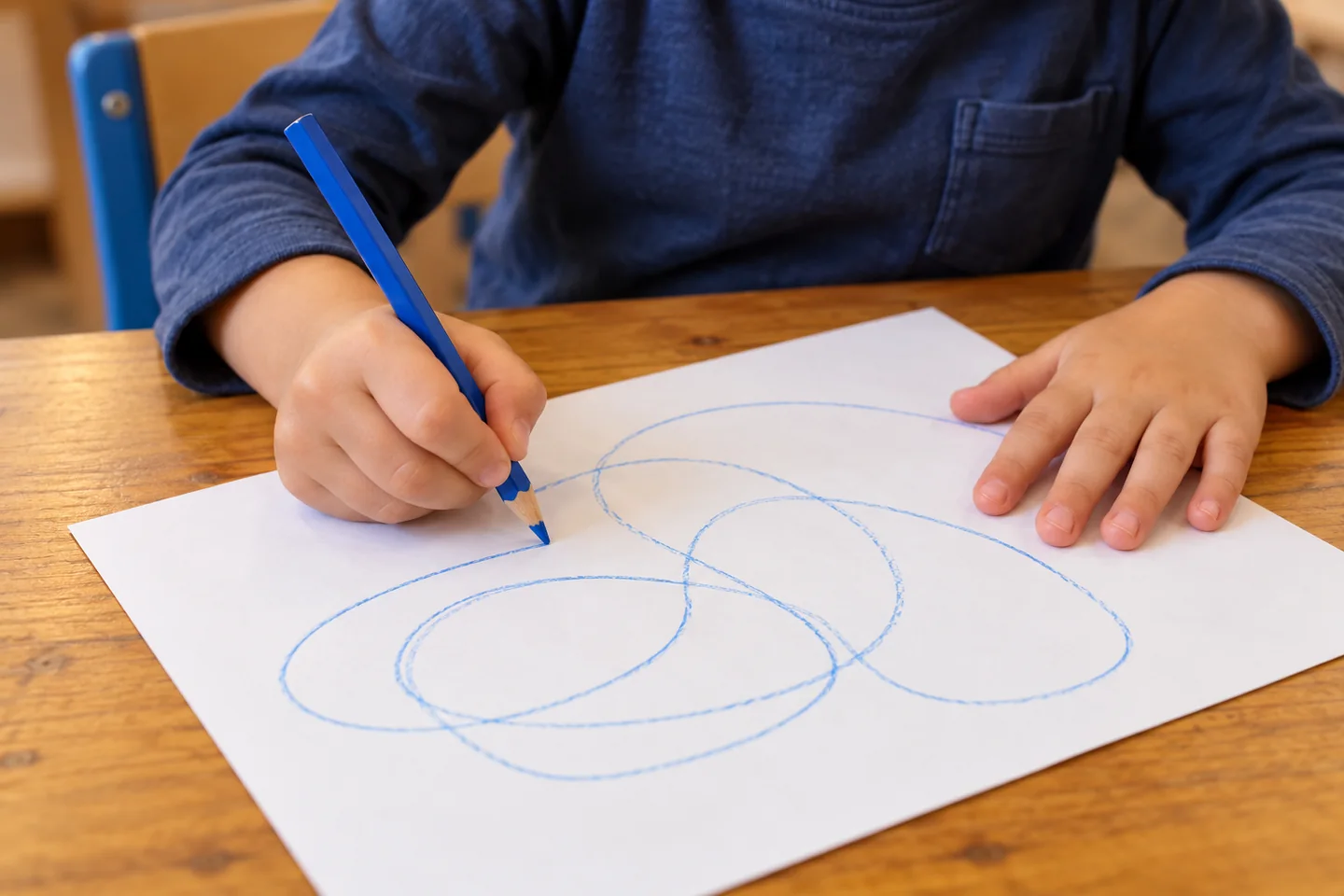
The page has a hole where the sentence used to be. The child is still rubbing at the pencil marks, and the assignment is only half done. Telling them to “just leave it” may sound simple from the other side of the table. For the child holding the eraser, the imperfect word may feel impossible to tolerate right now. You can protect the page and still leave room for the child to care about getting the work right.
Interrupt the damage gently
Begin with what you can see, not a judgment about the child’s attitude. You could say, “The paper is starting to tear. Let’s pause the eraser so we can keep a page to work on.” Move the eraser within reach but ask for a break from using it; don’t snatch the pencil or shame the child for caring about the result. A brief pause can give both of you time to decide what to do next.
The trade-off is that a draft may contain marks the child dislikes, while continuing to erase may leave no usable work at all. Offer a practical choice: write the next sentence on a fresh page, circle a word to revisit later, or use a single line through a mistake. For younger children, show the option on scrap paper. An older child may prefer a clean sheet or a digital draft, if that’s allowed.
Agree on a draft rule together
A rule can protect the work without requiring the child to stop noticing mistakes. You might say, “Let’s keep this version readable. If you want to change a word, cross it out once or put a small mark beside it and keep going.” Ask whether that feels possible, then invite the child to choose between two ways of marking revisions. If a teacher has given different instructions, follow those and ask about another method that fits.
Stay close enough to help without scanning every word for errors. Ask what the sentence is meant to say, then offer a spelling hint only if the child wants one or the task requires it. UNICEF’s guidance for teens recommends listening to a young person’s views and brainstorming solutions together when frustration is present [1]. For a younger child, that can mean offering a simple choice rather than taking over the writing. The child remains the author; the adult helps preserve a path forward.
If the erasing starts again
If your child resumes rubbing at the page, don’t repeat the rule as a lecture. Change the materials or the size of the task. Set the damaged page aside and ask whether they want to dictate one sentence while you write it on a separate sheet, or start with a short phrase they can copy or expand. If neither option works, pause the assignment and contact the teacher with a factual note about what happened and what you tried.
Look for a pattern in the work itself before deciding on a cause. The erasing may cluster around spelling, handwriting, a particular kind of question, or the moment the child thinks an adult will see the page. You can ask, “Which part makes you want to erase?” without assuming you know the answer. If the page tears again tomorrow, try thicker paper, a softer pencil, or a draft sheet where corrections are expected. Then ask the teacher whether the assignment can allow visible revisions. Tonight, a readable sentence on a new page may be enough to end with a next step.
References
Sources for the cited guidance and reported material. Worked examples and practical tools are original to Zolls.