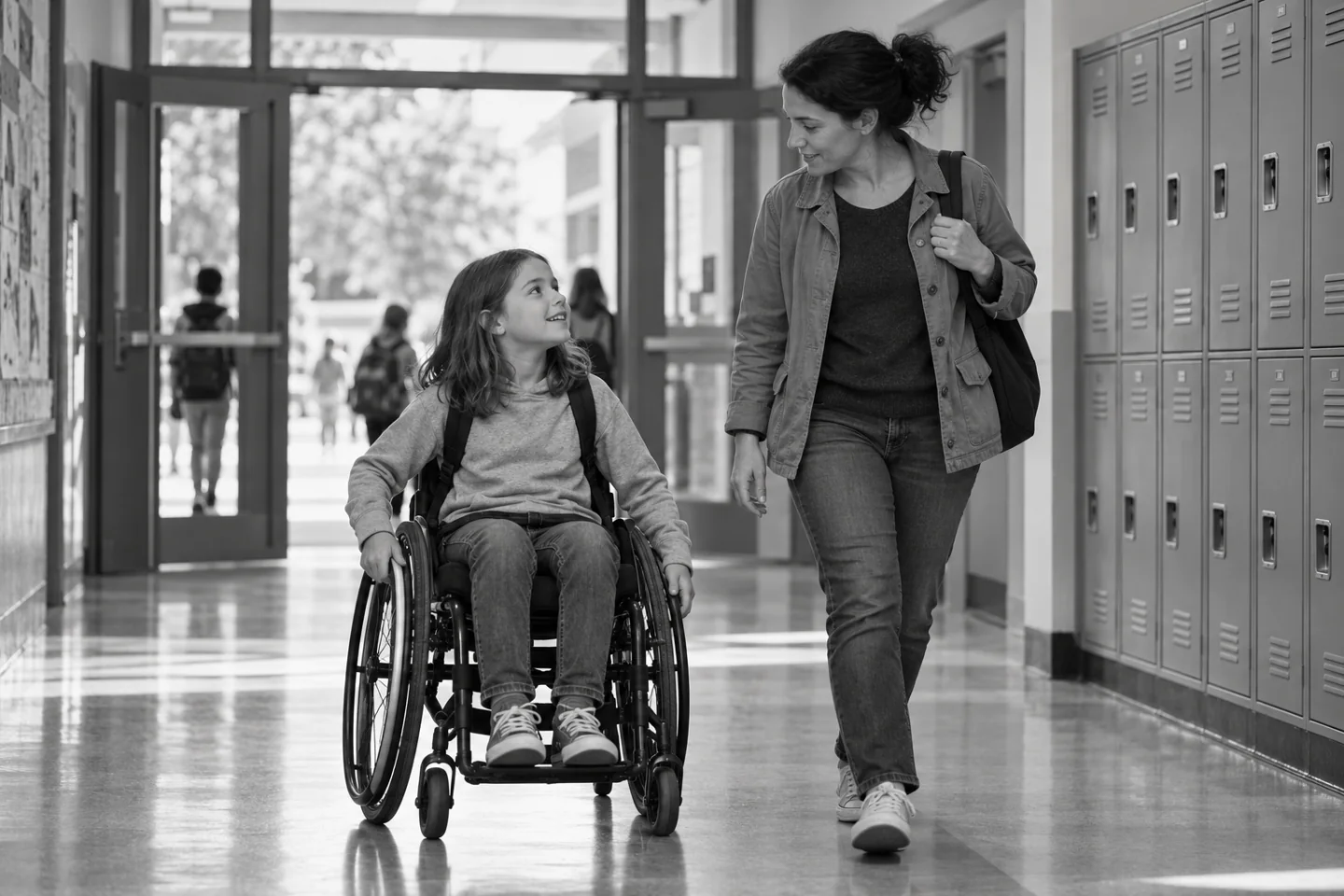
The new class has already chosen partners, learned its lunch routine, and filled the hallway with familiar faces. Your child arrives in the middle of all that, carrying a schedule they haven't memorized and questions they may not know how to ask. A helpful start isn't a promise that they'll feel settled quickly; it's a plan for the first unfamiliar moments.
Get the practical map before day one
Ask the school for the details a returning student might take for granted: where to enter, where the class meets, how lunch works, which adult to find if the schedule feels unclear. If possible, arrange a short visit or a simple map. A midyear start can bring many small unknowns, and reducing a few of them may make the first morning more manageable. Ask what information can be shared in advance and what the child would rather discover on the day.
Choose only the essentials to remember. For example, your child may need the classroom location and one staff member's name, while you keep the full schedule. If navigating noise, transitions, communication, or physical access is a concern, discuss practical supports with the school before arrival. A child can have a different plan for the first week without needing to explain private details to classmates.
Make an introduction that leaves room to be ordinary
Children differ in how much attention they want on the first day. Ask whether they would prefer a brief class introduction, a quiet welcome from the teacher, or a chance to settle in before classmates learn more. Possible wording to school staff is, “What is your usual welcome for a student joining midyear, and can we keep it low-key if that's what my child prefers?” This supports belonging without making the child perform gratitude or tell the class a personal story.
A buddy or peer guide can help with locating materials or finding the lunch area, but it shouldn't make one child responsible for another's social life. Ask whether an adult can check in as well. UNICEF encourages listening to young people's views and working with them on achievable routines during stressful circumstances [1]. Here, that broad idea can mean asking what would make the arrival easier and agreeing on one daily check-in, rather than deciding every detail for them.
Let the first connections be small
Your child may not leave with a new best friend. A useful first goal could be learning one classmate's name, finding a comfortable place at lunch, or knowing how to ask where to put a finished assignment. Ask about those practical pieces instead of “Did you make friends?” Possible wording after school: “Was there one part of the day that felt easier to find your way through?” They can answer briefly or take time before talking.
Keep a familiar anchor at home if it helps: the usual breakfast, a quiet after-school pause, or a predictable time to review the next day's schedule. Don't fill every evening with questions about school. A child may need to decompress before they can describe the day. If they want support, help them prepare one simple phrase, such as “Can you show me where this goes?” or “Who should I ask about lunch?”
Adjust the plan when the first week is rough
Your child may come home exhausted, say they hate the school, or ask to return to the old one. Listen without treating one difficult day as the final verdict. You could say, “That sounds like a hard start. Which part should we make easier tomorrow?” If they can't identify it, offer a short list: the entrance, lunch, finding a class, or asking for help. A concrete obstacle gives you something to raise with the teacher.
If the same difficulty continues, share specific observations with school staff and ask what they see during the day. Discuss a small change, such as a check-in at arrival or clarification about where to go after lunch. If the child reports threats, persistent targeting, or feeling unsafe, involve school staff promptly and seek appropriate adult support. For the next school day, choose one person your child can approach and confirm where to find them.
References
Sources for the cited guidance and reported material. Worked examples and practical tools are original to Zolls.