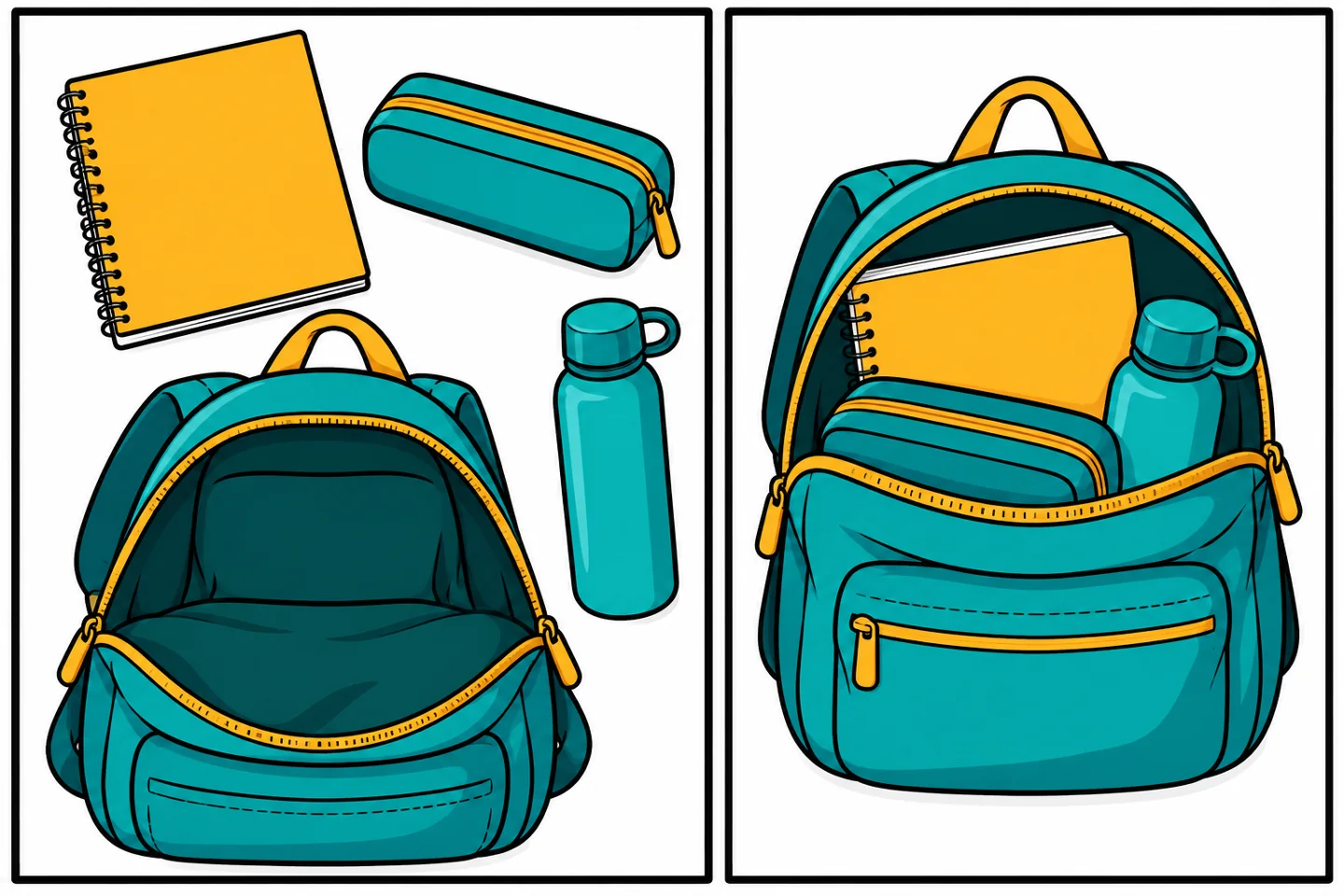
The bag is zipped, the shoes are on, and you notice the permission form still on the counter. You could slip it in yourself, then check every pocket tomorrow night. That might solve today's problem, but it leaves your child unable to tell which parts of packing are theirs and which parts you quietly manage.
Make the worry visible
Start by naming the real concern without making it a character judgment. “I worry that a library book or lunch container will get left behind. I also want you to know what you're responsible for.” This invites a practical arrangement instead of a contest over whether your child is careful. A child who needs reminders, visual cues, or extra time can still take part; responsibility can be shared in a way that fits them.
Agree on the parts of the bag that matter in your household: books for the next day, a folder, water bottle, lunch, or a particular support item. Avoid turning the list into a test of independence. For a younger child, use a picture or place each item in the same spot. An older child may prefer a phone reminder or a written schedule.
Pack side by side, not in secret
Choose a calm time before the morning rush and ask your child to pack while you stay nearby. Keep the checklist where both of you can see it. You might say, “You pack, and I can read the list if you'd like. When we're done, we'll look at the same bag together.” This makes a check a shared routine, not a covert search for mistakes.
Be specific about what you will do. If you check the outside pocket for the lunch container, say so. If your child wants you to check a particular item, agree on that. As their skills and circumstances vary, you can reduce or increase the support without pretending a check didn't happen. A child who has trouble organizing may benefit from a consistent layout, labeled pockets, or fewer loose items.
Let a small miss teach without a trap
If something is forgotten, focus on repairing the inconvenience. Perhaps a workbook is needed for class; contact the school if that is practical, or help your child ask what to do. Avoid arranging a deliberate failure to prove a point. A forgotten item can be an ordinary mistake, and the consequence may already be enough for the child to notice what helps next time.
Later, ask a narrow question: “What would make that easier tomorrow?” Your child might move the workbook beside the bag, put a reminder on the door, or ask you to check the list together. If an item is essential for access, safety, food, or comfort, an adult should make sure the plan covers it. Building responsibility doesn't require withholding a need.
If you keep wanting to reopen the bag
The first few evenings may feel uncomfortable. You may see a pocket that looks wrong or remember a past forgotten assignment. Instead of checking after your child goes to bed, use the agreed checklist while they are present. You can say, “I feel the urge to check again because I'm worried about tomorrow. Let's use our list once, together, and decide whether anything needs changing.”
If the routine keeps breaking down, make it smaller rather than turning up surveillance. Pack only the next day's items, or agree that you check one category while your child checks another. A child who resists may need a different time, a shorter list, or a say in where supplies live. The useful next step is the one you can both see and repeat; tonight, choose the checklist format and place it beside the bag.