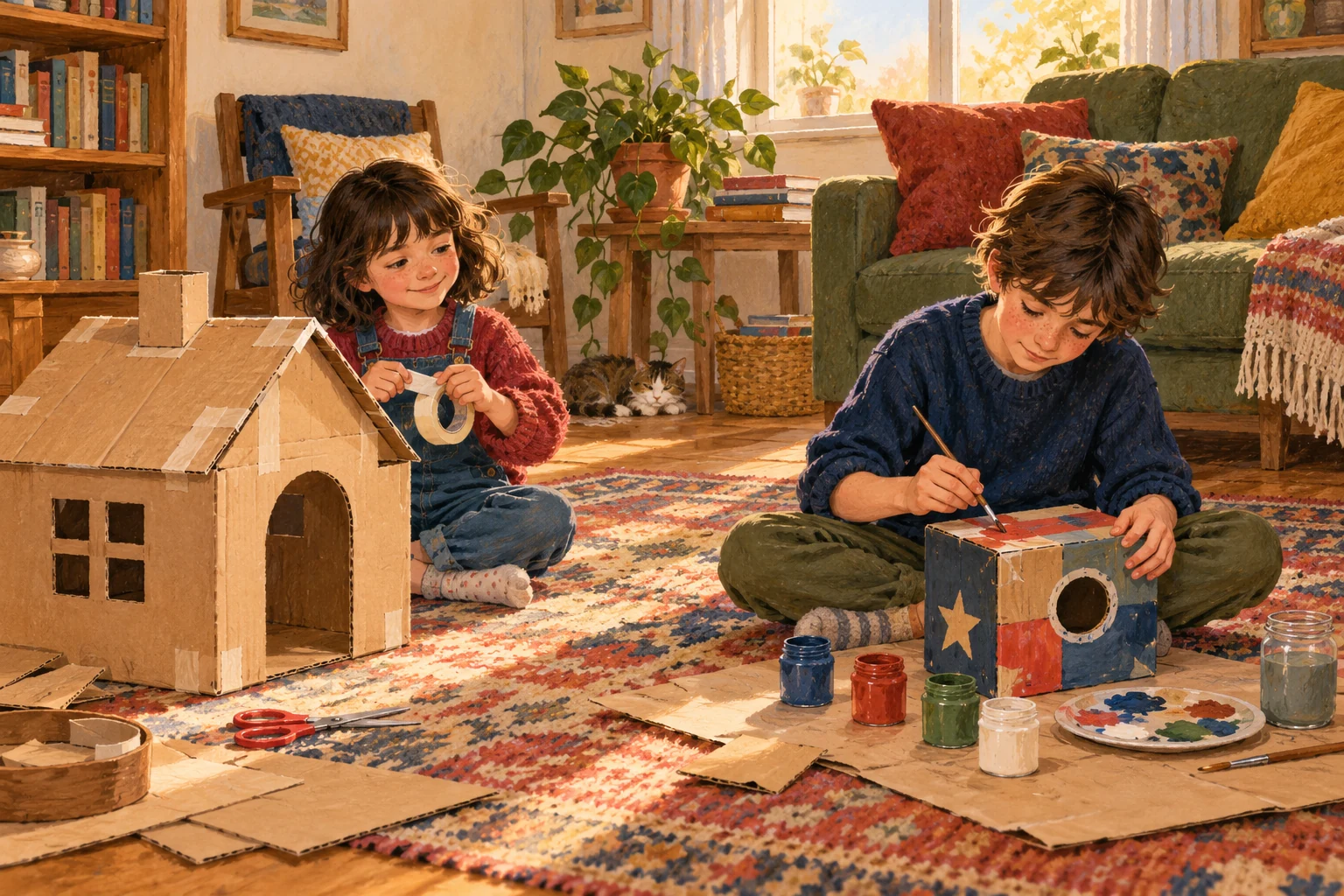
A calm-down corner your child does not experience as exile
A calming spot works best as an available place, not a destination imposed during conflict. Keep it ordinary, let the child shape it, and preserve your presence and choice.
An independent
parenting magazine.Baby days. School days. Everyday.
The complete collection
Communication, learning, growing independence and family life. Find a guide, a practical exercise or an attributed parent account.
267 articles
15 topics · care, growth & learningA calming spot works best as an available place, not a destination imposed during conflict. Keep it ordinary, let the child shape it, and preserve your presence and choice.
A child who holds it together at school may release frustration at home, where familiar routines and demands continue. Start with a gentler arrival and look for patterns without assuming one cause.
A missed stop or changed route can loom large when a child was counting on the expected sequence. Acknowledge the change, explain what remains steady, and offer one practical choice.
Illustrative family scenarioBeing asked to try again can feel like a second failure, especially when a child thought the first attempt was finished. A calm restart keeps the task clear while making room for frustration.
Two options can make a routine easier to enter, but a child may reject both when neither feels acceptable or the decision is too much. Hold the necessary limit and offer a path through the refusal.
A child can seek closeness and resist touch in the same upset moment. Stay near without guessing what their body means, and make it easy to choose contact, space, or another kind of support.
A public outburst is harder when one child needs support and another still needs your care. An illustrative family shows how to protect both children, lower the audience pressure, and adjust after a hurried first attempt.
Illustrative family scenarioA quick sorry can mark an attempt to repair, but it doesn’t make repeated hitting safe. Separate the children first, then build a clear response around preventing another hit and addressing the harm.
When anger and broken property land in the same moment, a fair response should address safety, repair, and access to the toy without piling on shame. The next step depends on what can realistically be restored.
A harsh self-label after a small slip can make a parent want to rush in with praise. A steadier response acknowledges the sting, separates the mistake from the child, and offers help without arguing about feelings.
A firm boundary may be followed by loud protest, repeated requests, or silence. An illustrative family shows how to keep the limit steady while helping a child and the rest of the household through the unsettled minutes that follow.
Illustrative family scenarioWhen plans have to change, a child may hear disappointment as evidence that they caused it. Take responsibility for the adult decision, explain only what’s useful, and offer a truthful next choice without promising another date you can’t keep.
A child may hide jealousy behind a joke, a complaint, or a quick claim that they don’t care. Make it possible to name the feeling without shaming anyone, then identify one fair request or action the child can take.
A newborn’s presents can make an older child feel like the only person expected to contribute. Make room for the older child’s own welcome, and keep any helping task small, optional and age-appropriate.
A dinner seat can become a nightly contest for your attention. One family’s imperfect seating experiment shows how to set a clear boundary while making room for each child’s preference.
Illustrative family scenarioA toddler’s interest can collide with an older child’s need to finish something intact. Set up a clear boundary, give the toddler a safe way to participate and agree on what to do if the project is touched.
One child’s bedtime chatter can keep a roommate from settling, even when neither is trying to cause trouble. Try a short quiet window, a separate place for conversation and a simple adjustment if the timing doesn’t fit.
A toy can become hard to surrender once a sibling reaches for it, even if it sat unused moments earlier. Stop the grab, find out what each child needs now and choose one clear next turn.
The former Enmeshed Parenting identity has its own archive section.